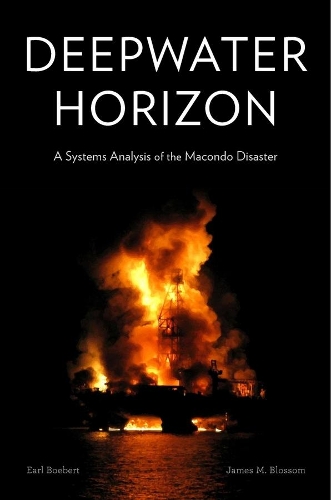
Книга Deepwater Horizon: A Systems Analysis of the Macondo Disaster
On April 20, 2010, the crew of the floating drill rig Deepwater Horizon lost control of the Macondo oil well forty miles offshore in the Gulf of Mexico. Escaping gas and oil ignited, destroying the rig, killing eleven crew members, and injuring dozens more. The emergency spiraled into the worst human-made economic and ecological disaster in Gulf Coast history.
Senior systems engineers Earl Boebert and James Blossom offer the most comprehensive account to date of BP’s Deepwater Horizon oil spill. Sifting through a mountain of evidence generated by the largest civil trial in U.S. history, the authors challenge the commonly accepted explanation that the crew, operating under pressure to cut costs, made mistakes that were compounded by the failure of a key safety device. This explanation arose from legal, political, and public relations maneuvering over the billions of dollars in damages that were ultimately paid to compensate individuals and local businesses and repair the environment. But as this book makes clear, the blowout emerged from corporate and engineering decisions which, while individually innocuous, combined to create the disaster.
Rather than focusing on blame, Boebert and Blossom use the complex interactions of technology, people, and procedures involved in the high-consequence enterprise of offshore drilling to illustrate a systems approach which contributes to a better understanding of how similar disasters emerge and how they can be prevented.
"Readers wanting to know just what happened and why in the Deepwater Horizon disaster will never find a better book." - Open Letters Monthly
"Two senior systems engineers offer a comprehensive account of BP’s Deepwater Horizon oil spill, where escaping gas and oil destroyed the rig, killing 11, injuring dozens and creating the worst human-made ecological disaster ever in the Gulf of Mexico. The book sifts through the evidence, challenging the common explanation that the crew, under pressure to cut costs, made mistakes compounded by a safety device failure. Instead, individually innocuous corporate and engineering decisions combined to create the disaster. The complex interactions of technology, people and procedures involved in offshore drilling illustrate a systems approach that yields a better understanding of how to prevent similar disasters in the future." - ISE Magazine
"Most accounts of the Deepwater Horizon disaster dwell on the drama of the rig’s last hours, as the crew struggled to cope with the well blowout and then fought to survive. Those events are also part of Boebert and Blossom’s story, but the scope of their narrative is broader. Much of the action takes place deep underground, where drilling technology meets the uncertainties of geology, or else miles away in BP’s Houston offices. Their approach is analytic rather than dramatic. Theirs is the account for readers who want to understand how such disasters come about and what strategies might have the best chance of preventing more of them." - American Scientist