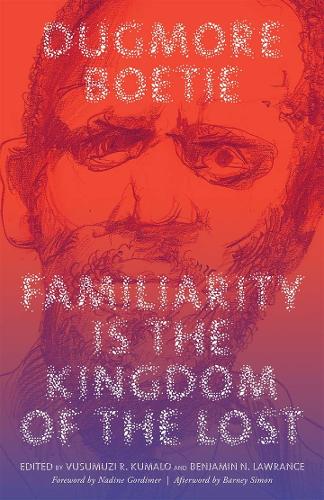
Книга Familiarity Is the Kingdom of the Lost
This fictionalized, first-person biography tells how a cunning rogue with nothing to lose relies on his guts and wits to survive amid racism and injustice in apartheid South Africa.
A fast-paced romp through apartheid-era South Africa that exemplifies the creative human capacity to overcome seemingly omnipotent enemies and overwhelming odds.
The picaresque hero of this novel, Duggie, is a dispossessed black street kid turned con man. Duggie’s response to being confined to the lowest level of South Africa’s oppressive and humiliating racial hierarchy is to one-up its absurdity with his own glib logic and preposterous schemes. Duggie’s story, as one critic puts it, offers “an encyclopedic catalogue of rip-offs, swindles, and hoaxes” that regularly land him in jail and rely on his white targets’ refusal to admit a black man is capable of outsmarting them.
Duggie exploits South Africa’s bureaucratic pass laws and leverages his artificial leg every chance he gets. As “a worthless embarrassment to the authorities and a bad example to the convicts,” Duggie even manages to get himself thrown out of jail. From Duggie’s Depression-era childhood in urban Johannesburg to World War II and the rise of the white supremacist apartheid regime to his final, bitter triumph, Boetie’s narrative celebrates humanity’s relentless drive to survive at any cost.
This new edition of Boetie’s out-of-print classic features a recently discovered photograph of the author, an introduction replete with previously unpublished research, numerous annotations, and is accompanied by Lionel Abrahams’ haunting poem, “Soweto Funeral,” composed after attending Boetie’s interment, all of which render the text accessible to a new generation of readers.
"“A racy picaresque novel presented as a memoir; more accurately, a literary con. Whatever its genre, it is a flight of wild comic exaggeration and invention that is not only vibrantly funny but a more honest expression of the despair of black South Africans than any number of moralizing exhortations.”" - New York Times Book Review (1970)
"“Nothing like this bullet-like prose has shot out—or been provoked out—of anywhere before. For it is a book with all of life and death in it, including a marvellous lack of pretence at human or artistic perfection.”" - The Guardian (1969)
"“There are images in this book that burn the mind.”" - Publishers Weekly (1970)
"“Duggie is the distillation of urban African experience. Without parentage or tradition, he makes the whole of black South Africa his playground. The succession of pocket-pickings, robberies, hi-jackings, and confidence tricks constitutes a primer of Johannesburg’s criminal underground.”" - The Journal of Commonwealth Literature (1972)
"“Dugmore Boetie was a thief, a convict (many times), part of a jazz combo and a con man extraordinary. Yet in a South Africa where blacks are humiliated, frustrated, deprived of basic human rights, a cynical agility is an edge on crushing destruction.”" - Kirkus Reviews (1969)