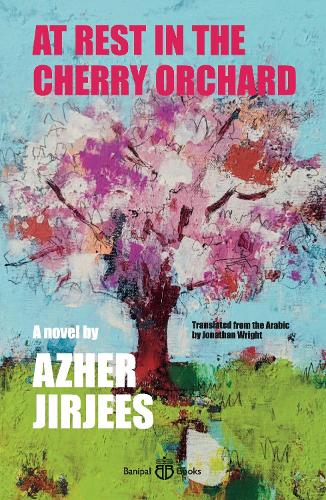
Книга At Rest in the Cherry Orchard
Through the story of Iraqi Said Jensen, who is granted asylum in Norway and builds his life there but is forever haunted by his father's disappearance, Iraqi author Azher Jirjees's debut novel captures brilliantly the way Iraqi life flips from reality to unreality and back as people have to find ways to live with the bloody horrors and deprivation that count as 'normal life', leading to countless people fleeing and countless others thrown into mass graves. A monumental account of human endurance. Key Points: * Living through deprivation, death and displacement * Adopting new language, a new love, a new life * Dealing with mental health, grief and loss * Ability of human beings to endure and look for peace. Keywords: * nightmare; dream; father; Iraq; postman; love; asylum; blood; mass grave; gravestone; headache; ketamine; depression; neighbour; inbox; messages; sectarian; treason; traitor; dictator; cherry orchard; Nazim al-Ghazali; temperature
Said Mardan flees Iraq when a colleague reports him for a joke about Saddam Hussein. He obtains asylum in Norway, learns the language, and becomes a postman. He marries his Norwegian language teacher Tona, even adopts her family name Jensen, and starts writing satirical stories in Norwegian for the Dagposten newspaper. However, he suffers throughout from all too vivid visitations from the ghost of his dead father, who was seized and killed by the regime before Said was born. "Where's my grave?" his father always asks. Said's life is upturned after his wife dies suddenly and he struggles with growing depression, headaches and cruel, haunting nightmares while painful and bloody memories keep rising to the fore, possibly aided by the ketamine he has been prescribed. He is urged by e-friend Abir to come immediately back to Baghdad, where a mass grave that probably contains his father's remains is about to be opened. He goes back at short notice, only to find that Baghdad after the US invasion of 2003 is not the paradise he has been promised. On the contrary the city is exhausted and in the poisonous thrall of competing religious militias: he has to carry two sets of false IDs to oblige whichever one stops him. After a brutal encounter and finding himself in a large cemetery, he recalls fondly his old Norwegian neighbour Jakob who bought an orchard of cherry trees so that he could be laid to rest there, and according to old legend, reincarnate into a cherry tree. At the mass grave, Said takes a photo of his father - an incomplete father, that is, just a skull and some bones - to fill the empty frame he brought with him. After his shattering experiences, can he also find rest in a cherry orchard?