Print campaign:
LA Times, NY Times, NY Post, NY Newsday, Harper's, The Nation, London Review of Books, The Believer, Bomb, Bookforum, In These Times, Chicago Sun Times, Chicago Tribune, Minneapolis Star Tribune, SF Chronicle, Guardian UK, Toronto Globe & Mail, Miami Herald, Poets & Writers, New Republic, NY Review of Books, New Yorker, Rain Taxi, Bloomsbury Review, Village Voice, Wall St Journal, Washington Post, Associated Press, Oregonian, NY Magazine, Lambda Book Report, Gay and Lesbian Review, World Literature Today. We'll send to the trades: PW, Kirkus, Library Journal, and Booklist.
Pursue Excerpts and/or Reviews in:
Literary translation journals such as: eXchanges Journal of Literary Translation (University of Iowa), TWO LINES, Metamorphoses (Smith College), Circumference (Columbia University), Conjunctions (Bard College), Massachusetts Review
Online/social media campaign:
Words Without Borders, Conversational Reading, Three Percent (University of Rochester), The Rumpus, World Literature Today, Bookslut, Salonica World Lit, Complete Review, Molussus, Awl, Facebook, Twitter, Goodreads, Wikipedia
Radio:
PRI's "The World"
Endorsements:
Will pursue a blurb from Orhan Pamuk, a Nobel prize winner who has been compared to Karasu.
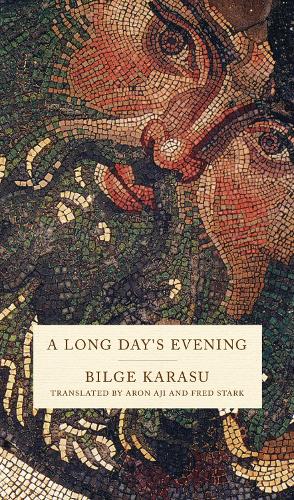
"One of Turkey's most interesting modern writers."--Booklist When the Emperor of Byzantium orders the destruction of all religious paintings and icons, Constantinople is thrown into crisis. Fear grips the monastery where Andronikos, a young monk, is thrown into a spiritual crisis. Amidst stirrings of resistance he decides to escape, leaving behind his beloved Ioakim, who must confront his own crisis of faith and decide where to place his allegiance. The dualities of dogma and faith, individual and society, East and West, are embodied in a story of prohibited love and devotion to the unseen. Bilge Karasu (1930--1995) was born in Istanbul. Often referred to as "the sage of Turkish literature," during his lifetime he published collections of stories, novels, and two books of essays. "The 'other' is usually construed as a person or society removed from 'us' by space. But Karasu has chosen to study his 'other' across the divide of time, pushing readers to compare the profound identity crises engulfing individuals in ancient Byzantium to those in the early Turkish Republic. In doing so, Karasu shows the futility of separating ourselves from 'others' -- and the social upheaval that results when we do."--Time Out Istanbul