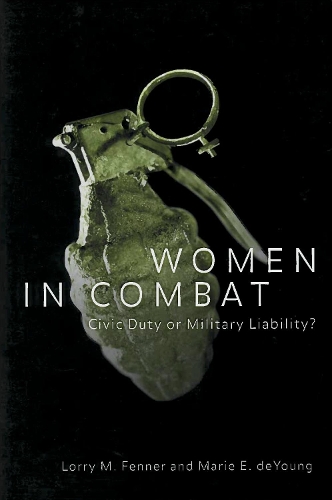
Книга Women in Combat: Civic Duty or Military Liability?
This is an extremely thoughtful as well as thought-provoking presentation of contrasting views on a subject of critical importance to the future of the United States defense policy. It is certain to provoke both reflection and controversy. -- Gerhard L. Weinberg, emeritus, University of North Carolina at Chapel Hill Women in Combat offers an impassioned and stimulating debate significant to all of us. -- Gerald F. Linderman, professor emeritus of history, University of Michigan Informed and passionate, Lieutenant Colonel Fenner and Captain deYoung argue opposing views, forcing the attentive reader to confront the tough question: If women are vital to the American military, why exclude them from combat? -- John Shy, professor emeritus of history, University of Michigan Both positions are presented with a moral intensity and an intellectual force that makes Women in Combat a model for disputations on public issues. -- Dennis Showalter, Colorado College
Women have been actively involved the United States military for more than fifty years, but the ban on their participation in combat remains a hotly debated issue. In this provocative book Lorry M. Fenner, an active-duty Air Force intelligence officer, calls for opening all aspects of military service to women. Marie deYoung, a former Army chaplain, argues that keeping women out of combat is in the best interests of both sexes and crucial to the effectiveness of the military as a whole. Fenner bases her argument for inclusion of women on the idea that democracies require all citizens to compete in public endeavor and share in civic obligation. She contends that, historically, reasons for banning women from combat have been culturally biased. She argues that membership in a combat force should be based on capability judged against appropriate standards. Moreover, she maintains that excluding women hampers the diversity and adaptability that by necessity will characterize the armed forces in the twenty-first century. In contrast, deYoung declares that the different physical fitness standards for men and women would, in combat, lower morale for both sexes and put women at risk of casualty. Further, she contends that women have neither the physical or emotional strength to endure the overall brutality of the combat experience. She also asserts that calls for lifting the combat ban are politically motivated and are inconsistent with the principles of American democracy and the mission of national defense. With each author responding to the views of the other, their exchange offers a valuable synthesis of the issues surrounding a longstanding debate among policymakers, military personnel, and scholars of both military history and women's studies.