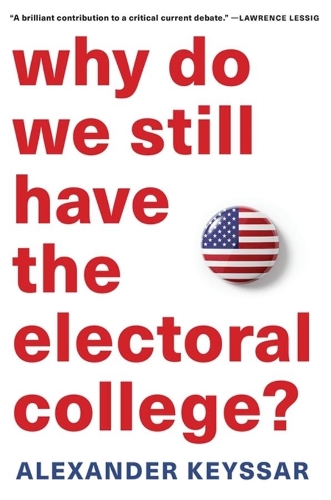
Книга Why Do We Still Have the Electoral College?
A New Statesman Book of the Year
“America’s greatest historian of democracy now offers an extraordinary history of the most bizarre aspect of our representative democracy—the electoral college…A brilliant contribution to a critical current debate.”
—Lawrence Lessig, author of They Don’t Represent Us
Every four years, millions of Americans wonder why they choose their presidents through an arcane institution that permits the loser of the popular vote to become president and narrows campaigns to swing states. Congress has tried on many occasions to alter or scuttle the Electoral College, and in this master class in American political history, a renowned Harvard professor explains its confounding persistence.
After tracing the tangled origins of the Electoral College back to the Constitutional Convention, Alexander Keyssar outlines the constant stream of efforts since then to abolish or reform it. Why have they all failed? The complexity of the design and partisan one-upmanship have a lot to do with it, as do the difficulty of passing constitutional amendments and the South’s long history of restrictive voting laws. By revealing the reasons for past failures and showing how close we’ve come to abolishing the Electoral College, Keyssar offers encouragement to those hoping for change.
“Conclusively demonstrates the absurdity of preserving an institution that has been so contentious throughout U.S. history and has not infrequently produced results that defied the popular will.”
—Michael Kazin, The Nation
“Rigorous and highly readable…shows how the electoral college has endured despite being reviled by statesmen from James Madison, Thomas Jefferson, and Andrew Jackson to Edward Kennedy, Bob Dole, and Gerald Ford.”
—Lawrence Douglas, Times Literary Supplement
A New Statesman Book of the Year
“America’s greatest historian of democracy now offers an extraordinary history of the most bizarre aspect of our representative democracy—the electoral college…A brilliant contribution to a critical current debate.”
—Lawrence Lessig, author of They Don’t Represent Us
Every four years, millions of Americans wonder why they choose their presidents through an arcane institution that permits the loser of the popular vote to become president and narrows campaigns to swing states. Congress has tried on many occasions to alter or scuttle the Electoral College, and in this master class in American political history, a renowned Harvard professor explains its confounding persistence.
After tracing the tangled origins of the Electoral College back to the Constitutional Convention, Alexander Keyssar outlines the constant stream of efforts since then to abolish or reform it. Why have they all failed? The complexity of the design and partisan one-upmanship have a lot to do with it, as do the difficulty of passing constitutional amendments and the South’s long history of restrictive voting laws. By revealing the reasons for past failures and showing how close we’ve come to abolishing the Electoral College, Keyssar offers encouragement to those hoping for change.
“Conclusively demonstrates the absurdity of preserving an institution that has been so contentious throughout U.S. history and has not infrequently produced results that defied the popular will.”
—Michael Kazin, The Nation
“Rigorous and highly readable…shows how the electoral college has endured despite being reviled by statesmen from James Madison, Thomas Jefferson, and Andrew Jackson to Edward Kennedy, Bob Dole, and Gerald Ford.”
—Lawrence Douglas, Times Literary Supplement
"Comprehensive and full of historical insight. Even specialists in political and constitutional history will encounter surprises…As another presidential election looms, [it] deserve[s] a wide readership." - London Review of Books
"Monumental…fills in the blind-spot we did not know we had…It is hard to imagine another work significantly improving on this study of the recurrent controversies over the design of the Electoral College…Provides bracing accounts of how far partisans were once willing to go to manipulate the features of the presidential election system to advance their cause." - New Rambler
"One of the chief virtues of Alexander Keyssar’s remarkable new book Why Do We Still Have the Electoral College? is that it conclusively demonstrates the absurdity of preserving an institution that has been so contentious throughout U.S. history and has not infrequently produced results that defied the popular will…A scholarly masterpiece…Keyssar has crafted an absorbing, if dispiriting, narrative about the durable obstacles to structural change in the United States." - The Nation
"Rigorous and highly readable…shows how the electoral college has endured despite being reviled by statesmen from James Madison, Thomas Jefferson, and Andrew Jackson to Edward Kennedy, Bob Dole, and Gerald Ford." - Times Literary Supplement
"A brilliant history, analysis, and critique of one of the most undemocratic elements of our supposed democracy—and another anti-democratic device whose roots were partly racist." - American Prospect
"Perfectly timed…Keyssar tells a riveting and winding tale about attempts to reform the Electoral College and replace it with either a national popular vote or a distribution of electors in proportion to the state’s popular vote…His confrontation with racism in the U.S. as it relates to electoral reform—a topic that isn’t often viewed through this lens—is one of the strengths that make this book well worth the read." - LSE Review of Books
"Sets out to explain the persistence of a technique that in public opinion polls has never accumulated support from a majority of Americans…[Keyssar’s] telling, artfully balancing broad themes and specific anecdotes, is both readable and valuable; knowing how we got here is a useful prerequisite to charting how to get where we want to be." - Washington Times
"[A] remarkable book." - The Nation
"[A] comprehensive new history of the Electoral College." - New York Times
"To fully explain how difficult the Electoral College is to dislodge, Keyssar chronicles more than two centuries of near-constant disputation and battle." - Washington Monthly
"To thoroughly understand the Electoral College, but also the nature of institutional reform in general and American Constitutional reform in particular, one could hardly do better." - Liberal Currents
"A detailed history of the electoral college and the attempts to change it…Enlivened by fascinating episodes in U.S. political history." - Australian Book Review
"A rigorous historian of the institution." - New Yorker
"Pathbreaking historical analysis." - Balkinization
"Excellent." - Bloomberg
"I would definitely recommend it to anyone who wanted to properly understand the Electoral College…It’s designed to inform the debate in the US over whether or not it should be reformed, and if so, how that could be achieved…Not only a masterful narrative history, but a powerful political intervention…Deeply rewarding." - Oxonian Review
"[A] definitive study." - Jacobin
"Will surely remain one of the most detailed and scholarly investigations into these serial attempts at reform, while also offering a thoughtful analysis of the many different reasons for their failure." - New Left Review
"The most thorough study of our Electoral College debates ever written…A magnum opus with many contributions to political understanding." - Claremont Review of Books
"Provides perhaps the most exhaustive treatment of the oft-maligned body. Despite nearly a thousand attempts to reform or abolish it, the Electoral College has persisted. Keyssar sets out to help readers understand why this is the case. In rich detail, he illustrates how the complex nature of the Electoral College and the difficulties presented by the constitutional amendment process largely explain its resilience…A must read for anyone interested in understanding the Electoral College and its history." - Choice
"Without question this is the best book ever written on the electoral college. It destroys any pretense to the wisdom of the framers in crafting the institution, and it points to a history of repeated problems with it…Anyone who cares about American politics, democracy, or the Constitution needs to read Why Do We Still Have the Electoral College? It opens up our eyes to how we think about our political process and to whose benefit it serves." - New York Journal of Books
"Comprehensive and full of historical insight. Even specialists in political and constitutional history will encounter surprises…As another presidential election looms, [it] deserve[s] a wide readership." - London Review of Books
"Monumental…fills in the blind-spot we did not know we had…It is hard to imagine another work significantly improving on this study of the recurrent controversies over the design of the Electoral College…Provides bracing accounts of how far partisans were once willing to go to manipulate the features of the presidential election system to advance their cause." - New Rambler
"One of the chief virtues of Alexander Keyssar’s remarkable new book Why Do We Still Have the Electoral College? is that it conclusively demonstrates the absurdity of preserving an institution that has been so contentious throughout U.S. history and has not infrequently produced results that defied the popular will…A scholarly masterpiece…Keyssar has crafted an absorbing, if dispiriting, narrative about the durable obstacles to structural change in the United States." - The Nation
"Rigorous and highly readable…shows how the electoral college has endured despite being reviled by statesmen from James Madison, Thomas Jefferson, and Andrew Jackson to Edward Kennedy, Bob Dole, and Gerald Ford." - Times Literary Supplement
"A brilliant history, analysis, and critique of one of the most undemocratic elements of our supposed democracy—and another anti-democratic device whose roots were partly racist." - American Prospect
"Perfectly timed…Keyssar tells a riveting and winding tale about attempts to reform the Electoral College and replace it with either a national popular vote or a distribution of electors in proportion to the state’s popular vote…His confrontation with racism in the U.S. as it relates to electoral reform—a topic that isn’t often viewed through this lens—is one of the strengths that make this book well worth the read." - LSE Review of Books
"Sets out to explain the persistence of a technique that in public opinion polls has never accumulated support from a majority of Americans…[Keyssar’s] telling, artfully balancing broad themes and specific anecdotes, is both readable and valuable; knowing how we got here is a useful prerequisite to charting how to get where we want to be." - Washington Times
"[A] remarkable book." - The Nation
"[A] comprehensive new history of the Electoral College." - New York Times
"To fully explain how difficult the Electoral College is to dislodge, Keyssar chronicles more than two centuries of near-constant disputation and battle." - Washington Monthly
"To thoroughly understand the Electoral College, but also the nature of institutional reform in general and American Constitutional reform in particular, one could hardly do better." - Liberal Currents
"A detailed history of the electoral college and the attempts to change it…Enlivened by fascinating episodes in U.S. political history." - Australian Book Review
"A rigorous historian of the institution." - New Yorker
"Pathbreaking historical analysis." - Balkinization
"Excellent." - Bloomberg
"I would definitely recommend it to anyone who wanted to properly understand the Electoral College…It’s designed to inform the debate in the US over whether or not it should be reformed, and if so, how that could be achieved…Not only a masterful narrative history, but a powerful political intervention…Deeply rewarding." - Oxonian Review
"[A] definitive study." - Jacobin
"Will surely remain one of the most detailed and scholarly investigations into these serial attempts at reform, while also offering a thoughtful analysis of the many different reasons for their failure." - New Left Review
"The most thorough study of our Electoral College debates ever written…A magnum opus with many contributions to political understanding." - Claremont Review of Books
"Provides perhaps the most exhaustive treatment of the oft-maligned body. Despite nearly a thousand attempts to reform or abolish it, the Electoral College has persisted. Keyssar sets out to help readers understand why this is the case. In rich detail, he illustrates how the complex nature of the Electoral College and the difficulties presented by the constitutional amendment process largely explain its resilience…A must read for anyone interested in understanding the Electoral College and its history." - Choice
"Without question this is the best book ever written on the electoral college. It destroys any pretense to the wisdom of the framers in crafting the institution, and it points to a history of repeated problems with it…Anyone who cares about American politics, democracy, or the Constitution needs to read Why Do We Still Have the Electoral College? It opens up our eyes to how we think about our political process and to whose benefit it serves." - New York Journal of Books