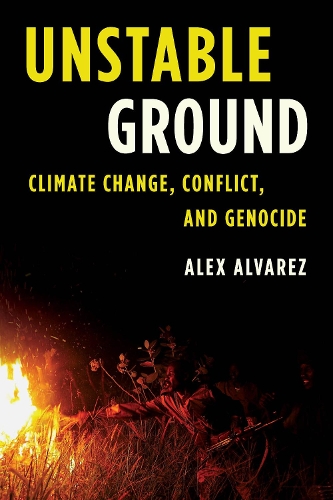
Книга Unstable Ground: Climate Change, Conflict, and Genocide
Unstable Ground looks at the human impact of climate change and its potential to provoke some of the most troubling crimes against humanity—ethnic conflict, war, and genocide. Alex Alvarez provides an essential overview of what science has shown to be true about climate change and examines how our warming world will challenge and stress societies and heighten the risk of mass violence. Drawing on a number of recent and historic examples, including Darfur, Syria, and the current migration crisis, this book illustrates the thorny intersections of climate change and violence. The author doesn’t claim causation but makes a compelling case that changing environmental circumstances can be a critical factor in facilitating violent conflict. As research suggests climate change will continue and accelerate, understanding how it might contribute to violence is essential in understanding how to prevent it.
"Alvarez, professor of criminology and criminal justice at Northern Arizona University, examines climate change and its effect on conflicts in this thoughtful academic volume. He argues that the pressing issue regarding climate change is the role it plays in ‘helping create certain kinds of conflict,’ particularly ‘communal and ethnic violence, war, and genocide.’ Alvarez lays out a few ways in which environmental shifts can affect populations and occasionally lead to famine and war. He cites as an example the record heat waves that struck India and Pakistan in the summer of 2016, which melted pavement and killed over 1,000 people. Alvarez also discusses access to natural resources such as wood, oil, and gas, explaining that they ‘allow a state to meet the basic survival needs of its citizens.’ Water, Alvarez notes, is often taken for granted in industrialized nations ‘where cheap and apparently endless supplies of fresh water are readily available.’ He writes of the massive drought that ravaged Syria from 2006–2011 and bears some responsibility for the subsequent conflict there. On the flip side, populations are equally threatened by flooding rivers and rising sea levels. Alvarez’s thoughtful and precise work highlights some deeply troubling but underdiscussed aspects of climate change." - Publishers Weekly
"Beginning with his hometown of Flagstaff, Arizona, Alvarez then moves around the globe to show how the local and global need to be thought of together with regard to climate change, violence, and death. This approach is, essentially, one significant path towards acknowledging the severity and pervasiveness of some of the globe’s most vital and pressing issues, as well as one that often blocks the way for many people who see nothing wrong at home and therefore see no tie to the broader global community. The book is an extended exercise for the author to come to terms with some of today's most monumental issues. Alvarez is not making the case for the existence of climate change or humanity’s causal relationship to it. These are scientific facts that form the background of the book and need no further explanation or expansion. Instead, the author investigates how humanity will potentially deal with this clear and present danger. An intriguing work that explores an existential crisis without existentialism, for those willing to confront some ugly truths about humanity. Summing Up: Highly recommended. All levels/libraries." - CHOICE