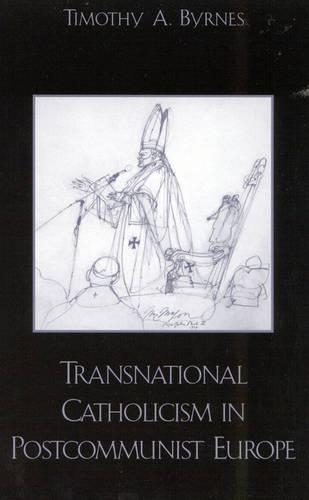
Through the use of three case studies—Poland, Croatia, and the Slovak Republic—Timothy Byrnes argues that the Catholic Church remains deeply involved in the central politics of this vital region over both governmental structure and public policy; deeply implicated (for better or worse) in the ethnic divisions that characterize the post-communist era; and profoundly part of the social fabric of virtually every state in East Central Europe.
"Byrnes demostrates how religion persistently gets entwined with nationalism to the point where it is hard to tell who is using whom. Recommended for upper-division undergraduates and above." - CHOICE
"Informative and thoughtful book." - First Things
"An accessible introduction to the religion and politics in postcommunist Europe and useful for those interested in comparative politics or the study of institutions." - The Review of Politics
"A concise and stimulating probe of the complex and dynamic nexus between religion and politics and between local traditions and universal ideals. Byrnes is to be praised for his innovative approach to examining the international vitality and importance of the Catholic Church in world politics. He is also to be lauded for showing the continuing importance of religion in eastern Europe and the necessity for scholars to take religion more seriously as a factor in international relations. The book is highly recommended to east European specialists and also to the general public." - Slavic Review