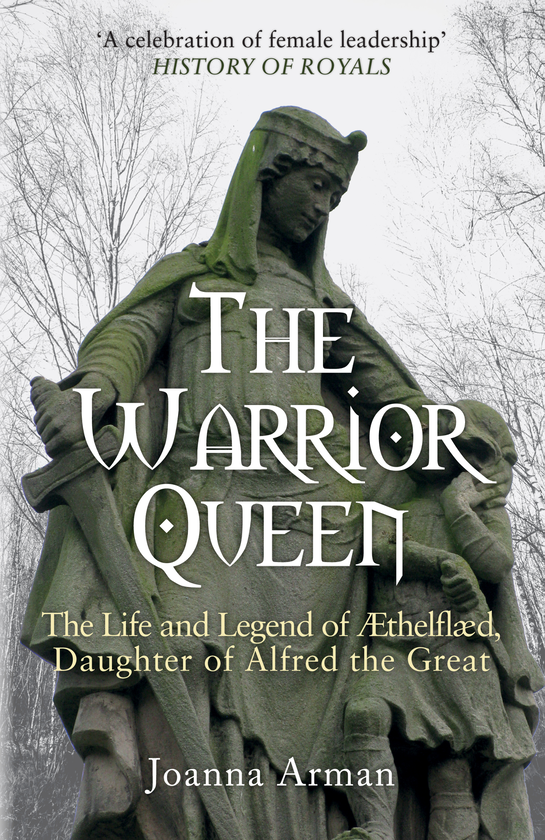
Æthelflæd, eldest daughter of Alfred the Great, has gone down in history as an enigmatic and almost legendary figure. To the popular imagination, she is the archetypal warrior queen, a Medieval Boudicca, renowned for her heroic struggle against the Danes and her independent rule of the Saxon Kingdom of Mercia. In fiction, however, she has also been cast as the mistreated wife who seeks a Viking lover, and struggles to be accepted as a female ruler in a patriarchal society.
The sources from her own time, and later, reveal a more complex, nuanced and fascinating image of the ‘Lady of the Mercians’. A skilled diplomat who forged alliances with neighbouring territories, she was a shrewd and even ruthless leader willing to resort to deception and force to maintain her power. Yet she was also a patron of learning, who used poetic tradition and written history to shape her reputation as a Christian maiden engaged in an epic struggle against the heathen foe.
The real Æthelflæd emerges as a remarkable political and military leader, admired in her own time, and a model of female leadership for writers of later generations.
- Sheds light on the true status of women in the Anglo-Saxon period
- A British female leader in a mould similar to Boudicca, or own Joan of Arc
- First full length historical biography of its kind, of a figure popular in historical fiction (for e.g. 'To Be A Queen' by Annie Whitehead)
- As the founder of several British towns or garrisons, for e.g. sites at Warwick, Gloucester, Hereford, Chester, Tamworth, Stafford, Bridgnorth, etc., she has strong local connections
- Includes maps, ancient manuscripts and images to help bring a long-lost world back to life