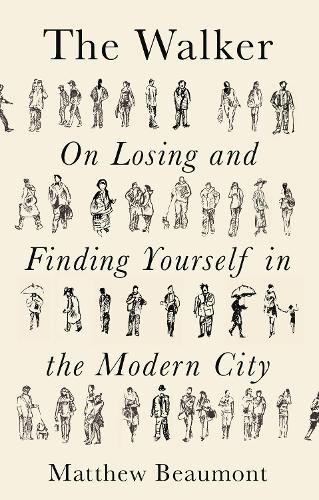
Книга The Walker: On Finding and Losing Yourself in the Modern City
A literary history of walking From Dickens to Zizek
There is no such thing as the wrong step; every time we walk we are going somewhere. Moving around the modern city becomes more than from getting from A to B, but a way of understanding who and where you are. In a series of riveting intellectual rambles, Matthew Beaumont, retraces a history of the walker.
From Charles Dicken's insomniac night rambles to wandering through the faceless, windswept monuments of the neoliberal city, the act of walking is one of escape, self-discovery, disappearances and potential revolution. Pacing stride for stride alongside such literary amblers and thinkers as Edgar Allen Poe, Andrew Breton, H G Wells, Virginia Woolf, Jean Rhys and Ray Bradbury, Matthew Beaumont explores the relationship between the metropolis and its pedestrian life. He asks can you get lost in a crowd? It is polite to stare at people walking past on the street? What differentiates the city of daylight and the nocturnal metropolis? What connects walking, philosophy and the big toe? Can we save the city - or ourselves - by taking the pavement?
"Nothing less than a grand unifying theory of the counter-enlightenment." - [in praise of Nightwalking]
"Part literary criticism, part social history, part polemic, this is a haunting addition to the canon of psychogeography." - [in praise of Nightwalking]
"An enthralling study of London after dark.... This is an impressive, magisterial book whose steady, earnest gaze also encompasses the lives of pickpockets and poets" - [in praise of Nightwalking]
"A wonderful book, that has many fascinating things to say about the night-time life of our capital down the ages. Rarely has a book on the subject of darkness been so illuminating; all insomniacs should read it" - [in praise of Nightwalking]
"[The Walker] is an erudite book that moves at a pace alternating between brisk and leisurely. ... Like his prose, Beaumont's mind is anything but pedestrian. He is as attuned to matters of medicine and science, anthropology, economics, philosophy and psychology as he is to literature and the visual arts. ... Beaumont uses the language of contemporary literary theory, but with none of the rebarbative jargon-mongering of others in the professoriate. His references to the usual suspects-from Marx, Freud and Adorno through Lacan and Derrida, to Deleuze and Guattari, Zizek and Agamben-are never gratuitous, but always helpful in understanding the literary, historical, and psychological terrain he explores." - Wall Street Journal
"[The Walker] is absolutely fascinating and [Beaumont's] literary references are wonderful...I absolutely loved it" - BBC Radio London
"The Walker seeks to take its reader on an intriguing journey ... if you're looking for some escapism that goes beyond the clichés of repetitive travel literature, this could well be the book for you." - Northern Soul
"[Beaumont's] style is a treat - elegant, intelligent and entertaining as he describes the ways we read a city with our feet and mind, and guides us through a history of walking writing from Dickens and Poe to Marx and Zizek." - Financial Times
"An uncanny and haunting foreshadowing of our cities as they now appear to us ... familiar subjects are given revelatory new interpretations ... thought-provoking" - Times Literary Supplement
"Drawing on numerous literary sources, both familiar and obscure, Beaumont takes the reader on a labyrinthine journey into the literature of walking and thinking" - Observer
"[A] heady blend of history and theory." - New Yorker
"Fascinating ... those interested in how literature has explored urban modernity are sure to find ample food for thought." - Publishers Weekly
"Dazzling" - Eminetra
"Dazzlingly erudite" - Guardian
"Elegantly written and compellingly argued ... A highly commendable, engaging, and thoroughly researched study, The Walker infuses the poetics of walking with the politics of homing." - English Studies
"From start to finish a delight to read, The Walker is the beginning of wisdom in all things metro-pedestrian." - New Statesman
"[The Walker] fascinates and informs from beginning to end ... Beaumont has positioned himself as the foremost theorist of walking working in English literary studies today." - The Wellsian
"Intriguing ... The Walker celebrates the secret, subversive life of cities and the people who pace their streets." - Daily Mail
"[A] well-researched work of literary criticism" - Observer
"Drawing on numerous literary sources, both familiar and obscure, Beaumont takes the reader on a labyrinthine journey into the literature of walking and thinking ... Baudelaire, the flâneur poet of the Parisian dispossessed of another time, would surely have approved." - Guardian