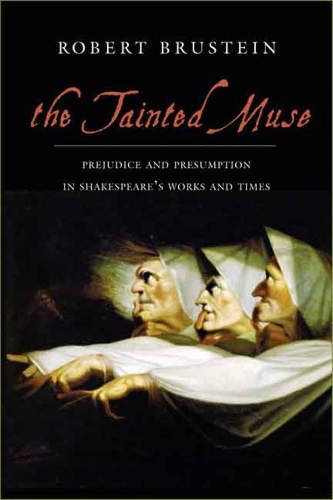
Книга The Tainted Muse: Prejudice and Presumption in Shakespeare and His Time
A provocative look at Shakespeare in his age by one of our most influential theater figures
This book is a masterful and engaging exploration of both Shakespeare's works and his age. Concentrating on six recurring prejudices in Shakespeare’s plays—such as misogyny, elitism, distrust of effeminacy, and racism—Robert Brustein examines how Shakespeare and his contemporaries treated them. More than simply a thematic study, the book reveals a playwright constantly exploiting and exploring his own personal stances. These prejudices, Brustein finds, are not unchanging; over time they vary in intensity and treatment. Shakespeare is an artist who invariably reflects the predilections of his age and yet almost always manages to transcend them.
Brustein considers the whole of Shakespeare's plays, from the early histories to the later romances, though he gives special attention to Hamlet, King Lear, Othello, and The Tempest. Drawing comparisons to plays by Marlowe, Middleton, and Marston, Brustein investigates how Shakespeare’s contemporaries were preoccupied with similar themes and how these different artists treated the current prejudices in their own ways. Rather than confining Shakespeare to his age, this book has the wonderful quality of illuminating both what he shared with his time and what is unique about his approach.
"Especially smart, provocative, and engaging....readers can enjoy the author's wicked political wit....[and his] tough but nuanceed commentary." —Dramatics - Dramatics Magazine
"[A] thoughtful analysis of perennially provocative issues."—Amy Arden, Folger Magazine - Folger Magazine
"
“Brustein’s great strength is his historical approach to Shakespeare . . . When [he] focuses on the recurring prejudices in Shakespeare’s works and in his time, his readings of these cankerous and often eruptive moments are astute, witty, political, modern, inspired, and brilliant.”—Colleen E. Kennedy, Theatre Journal
" - Theatre Journal"Fascinating to read."—Gerald Weales, American Theater - American Theater