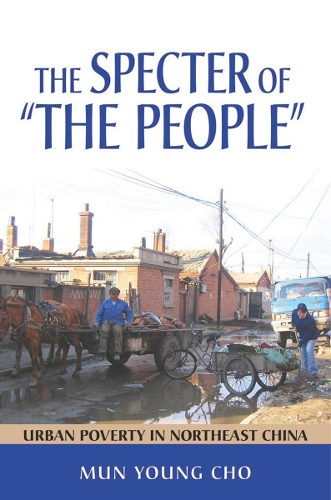
Книга The Specter of "the People": Urban Poverty in Northeast China
Despite massive changes to its economic policies, China continues to define itself as socialist; since 1949 and into the present, the Maoist slogan "Serve the People" has been a central point of moral and political orientation. Yet several decades of market-based reforms have resulted in high urban unemployment, transforming the proletariat vanguard into a new urban poor. How do unemployed workers come to terms with their split status, economically marginalized but still rhetorically central to the way China claims to understand itself? How does a state dedicated to serving "the people" manage the poverty of its citizens? Mun Young Cho addresses these questions in a book based on more than two years of fieldwork in a decaying residential area of Harbin in the northeast province of Heilongjiang.Cho analyzes the different experiences of poverty among laid-off urban workers and recent rural-to-urban migrants, two groups that share a common economic duress in China's Rustbelt cities but who rarely unite as one class owed protection by the state. Impoverished workers, she shows, seek protection and recognition by making claims about "the people" and what they deserve. They redeploy the very language that the party-state had once used to venerate them, although their claim often contradicts government directives regarding how "the people" should be reborn as self-managing subjects. The slogan "serve the people" is no longer a promise of the party-state but rather a demand made by the unemployed and the poor.
Despite massive changes to its economic policies, China continues to define itself as socialist; since 1949 and into the present, the Maoist slogan "Serve the People" has been a central point of moral and political orientation. Yet several decades of market-based reforms have resulted in high urban unemployment, transforming the proletariat vanguard into a new urban poor. How do unemployed workers come to terms with their split status, economically marginalized but still rhetorically central to the way China claims to understand itself? How does a state dedicated to serving "the people" manage the poverty of its citizens? Mun Young Cho addresses these questions in a book based on more than two years of fieldwork in a decaying residential area of Harbin in the northeast province of Heilongjiang.
Cho analyzes the different experiences of poverty among laid-off urban workers and recent rural-to-urban migrants, two groups that share a common economic duress in China’s Rustbelt cities but who rarely unite as one class owed protection by the state. Impoverished workers, she shows, seek protection and recognition by making claims about "the people" and what they deserve. They redeploy the very language that the party-state had once used to venerate them, although their claim often contradicts government directives regarding how "the people" should be reborn as self-managing subjects. The slogan "serve the people" is no longer a promise of the party-state but rather a demand made by the unemployed and the poor.
"
This well-researched and very readable book has a number of strong points.... [It] is a great contribution to the understanding of contemporary China from aspects of everyday urban poverty and governance that will suit both academics and students specializing in anthropology and/or China studies. It will also be useful to those who are interested in life at the grassroots level in urban China.
" - Asian Ethnology