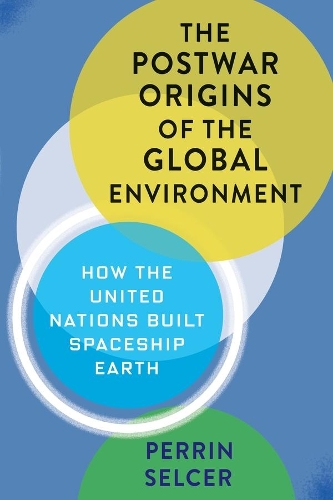
Книга The Postwar Origins of the Global Environment: How the United Nations Built Spaceship Earth
In the wake of the Second World War, internationalists identified science as both the cause of and the solution to world crisis. Unless civilization learned to control the unprecedented powers science had unleashed, global catastrophe was imminent. But the internationalists found hope in the idea of world government. In The Postwar Origins of the Global Environment, Perrin Selcer argues that the metaphor of “Spaceship Earth”—the idea of the planet as a single interconnected system—exemplifies this moment, when a mix of anxiety and hope inspired visions of world community and the proliferation of international institutions.
Selcer tells the story of how the United Nations built the international knowledge infrastructure that made the global-scale environment visible. Experts affiliated with UN agencies helped make the “global”—as in global population, global climate, and global economy—an object in need of governance. Selcer traces how UN programs such as UNESCO’s Arid Lands Project, the production of a soil map of the world, and plans for a global environmental-monitoring system fell short of utopian ambitions to cultivate world citizens but did produce an international community of experts with influential connections to national governments. He shows how events and personalities, cultures and ecologies, bureaucracies and ideologies, decolonization and the Cold War interacted to make global knowledge. A major contribution to global history, environmental history, and the history of development, this book relocates the origins of planetary environmentalism in the postwar politics of scale.
"An engaging microhistory." - Choice
"In these accounts, the environment was a cause for diplomats and scientists, not just wild-haired, Birkenstock-clad activists. In this sense, [The Postwar Origins of the Global Environment] move environmental history from the periphery to the mainstream of postwar intellectual and political history." - Los Angeles Review of Books
"Provides a useful nonlinear understanding of a commonly overlooked postwar success: the creation of potential energy stored in a transnational understanding of ecology that awaits a receptive political climate for influence and application by technocrats." - Journal of American History
"An insightful book. Selcer has made a valuable contribution to the growing body of scholarship that links environmental history, the history of science, and international history." - Diplomatic History
"A major contribution to the global history of environmental sciences and politics that lays new ground for
future research." - Isis