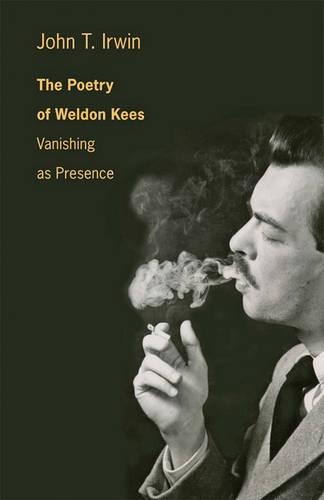
Книга The Poetry of Weldon Kees: Vanishing as Presence
Weldon Kees's poetry still leads readers into a strange world, arcane but hyperfamiliar, long after he disappeared in 1955. Even so, scholarship devoted to him is rare-and entire books rarer. Irwin does Kees justice and reveals what is programmatic to this distressed, as opposed to rugged, individualist and his peculiarly American problem of presence and impresence. -- James Reidel, author of Vanished Act: The Life and Art of Weldon Kees Weldon Kees is a vital American poet, still too little read. John Irwin's study goes a long way towards reviving the aesthetic importance of Weldon Kees. Irwin, author of the definitive book on the poetry of Hart Crane, renews Crane's legacy as he traces Crane's influence on Kees. -- Harold Bloom, author of Falstaff: Give Me Life With its creative intermingling of psychobiography, literary history and criticism, and philosophical rumination, this book is well researched, original, and penetrating. Anchored by a fascinating conceit that illuminates all that follows, The Poetry of Weldon Kees is both erudite and accessible. -- Robert Niemi, coauthor of The Bibliography of Weldon Kees
Weldon Kees is one of those fascinating people of whom you've likely never heard. Most intriguingly, he disappeared without a trace on July 18, 1955. Police found his 1954 Plymouth Savoy abandoned on the north side of the Golden Gate Bridge one day later. The keys were still in the ignition. Though Kees had alluded days prior to picking up and moving to Mexico, none of his poetry, art, or criticism has since surfaced either north or south of the Rio Grande. Kees's vanishing has led critics to compare him to another American modernist poet who met a similar end two decades prior-Hart Crane. In comparison to Crane, Kees is certainly now a more obscure figure. John T. Irwin, however, is not content to allow Kees to fall out of the twentieth-century literary canon. In The Poetry of Weldon Kees, Irwin ties together elements of biography and literary criticism, spurring renewed interest in Kees as both an individual and as a poet. Irwin acts the part of literary detective, following clues left behind by the poet to make sense of Kees's fascination with death, disappearance, and the lasting interpretation of an artist's work. Arguing that Kees's apparent suicide was a carefully plotted final aesthetic act, Irwin uses the poet's disappearance as a lens through which to detect and interpret the structures, motifs, and images throughout his poems-as the author intended. The first rigorous literary engagement with Weldon Kees's poetry, this book is an astonishing reassessment of one of the twentieth century's most gifted writers.