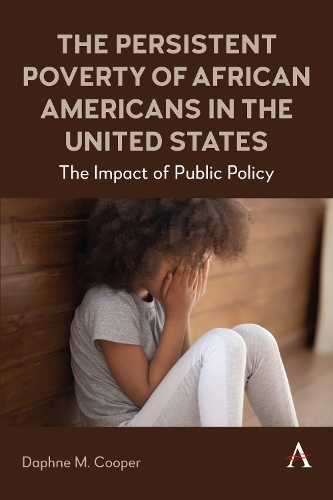
Книга The Persistent Poverty of African Americans in the United States: The Impact of Public Policy
Explores American politics and power that have disadvantaged African Americans through the implementation of public policies, causing them to remain poor and underprivileged in the United States
The primary purpose of this book is to introduce and question the persistent poverty that exists among African Americans in the United States. It will provide scholars and policy makers with the needed context to understand what constitutes poverty, and how and why African Americans have remained persistently poor and underprivileged in the United States. This book will provide new knowledge that will be useful to improving public policy. This book focuses on the factors that have influenced public policies concerning African Americans.
The purpose of this book is to shed light on American politics and power that have disadvantaged African Americans through the implementation of public policies, causing them to remain poor and underprivileged in the United States. History demonstrates that African Americans have inherited gateless poverty: exacerbated by living without training and skills; living in slums without decent medical care; having the devastating heritage of the long years of slavery; and a century of oppression, hatred, and injustice. African Americans in the United States started off at a disadvantage; they were hobbled by chains for years and then abruptly liberated, and brought to the starting line expecting to compete with everyone else.
This book will scrutinize persistent poverty using a model of institutional policies that have been implemented to keep African Americans as a permanent underclass thus withholding any measure of true equality, which I foundationally understand as racial and economically unjust. This book produces evidence that public policies, programs, and institutional practices have impacted African Americans. Therefore, it is important to challenge the long-standing misdirected paradigm, which blames the individual for being poor instead of holding the government accountable for the structural failures within the governmental system.
The persistent poverty that exists among African Americans is a result of the unanticipated consequence of a flawed policy system that was intended to alleviate problems but has, in fact, caused them to worsen. There has been considerable debate in both academic and policy arenas over the extent of long-term poverty. Some scholars argue that there is no long-term poverty problem and that most poverty is temporary and reflect short-run adjustment problems or life-cycle changes. Other scholars argue that some individuals and families remain poor for longer periods, perhaps over generations. One view blames poverty persistence on poor labor market opportunities, segregation, discrimination, inadequate under-funded schools, and the lack of community resources in disadvantaged neighborhoods. An additional group points to the work and marriage disincentives in the welfare system, the increasing number of female-headed households, the increases in teen-pregnancy and illegitimacy, deviant subcultures, and the personal deficiencies of the poor.
According to the Institute for Research on Poverty, African Americans and Latinos have poverty rates that greatly exceed the national average. Poverty levels differ depending on where people live; the metropolitan poverty rate differs greatly between suburbs and the central city, it also varies by region and within regions. According to Scott Allard, African Americans are impacted by federal housing policies, public housing practices, discriminatory mortgage lending, and racial steering, which all played a major role in the creation of poor Black neighborhoods. Douglas S. Massey argues that residential segregation is the primary structural cause of the geographical concentration of poverty in the U.S. urban areas. Research indicates that residential segregation is the principal structural feature of American society that is responsible for the perpetuation of poverty, which represents the primary cause of racial inequality in the United States. According to Wilson, Massey, and Denton, racially segregated urban poverty is one of the most recognizable products of housing discrimination and housing policy in America.