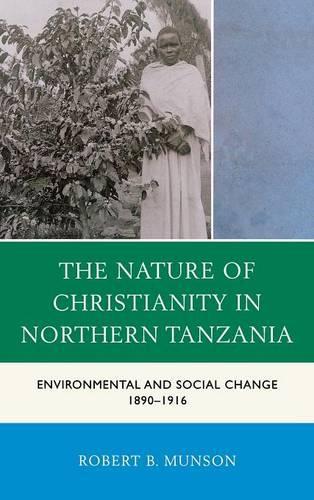
Книга The Nature of Christianity in Northern Tanzania: Environmental and Social Change 1890–1916
The Nature of Christianity in Northern Tanzania explores the relationship between the region’s environment and social change during the pivotal, often over-looked German colonial period (1890-1916). The work connects changes in the landscape order and biogeography closely with the beginning Christianization of the three groups on the mountains – the Chagga on Mt Kilimanjaro and the Meru and Arusha peoples of Mt Meru. The work tells a story which is ordered, green and Christian. It looks at both new ideas and plants brought by the Germans to their colony in East Africa. The introduced German-like order and the exotic plants changed the landscape during the short period of German rule. However, the changes taking root in the African societies, driven primarily by the introduction of Christianity, led to an acceptance and adaptation of these imports. Religious change is one of the most profound elements of social change and it deeply impacted the world view of the Chagga, Meru and Arusha peoples. Within all three groups, their worldview was closely tied to religion – there is no difference between the natural and social spheres nor the religious and secular worlds. In the interaction between the German and Africans, the ideas, use of plants and even Christianity became altered, Africanized, and finally propagated by the African groups, helping to create the new African/European landscape. This heritage lives on up till today, growing on the landscape, nurtured by the changes in the societies of the Chagga, Meru and Arusha peoples on Mt Kilimanjaro and Mt Meru.
"The Nature of Christianity in Northern Tanzania is very appealing in the way it illustrates the relationship between people, places, and plants while keeping people at the center of the story. . . .The book is well written and deals with materials in an engaging way, creating many points of reflection as one progresses through the chapters. . . .The author’s ability to tell this story while focusing on the environment is a major appeal of the book." - International Journal of African Historical Studies
"This work is a detailed chronicle of environmental and social changes that accompanied the introduction of Christianity and establishment of German colonial rule on the slopes of Mount Kilimanjaro and Mount Meru. Considering how important congregations and cash crops each became in northern Tanzania, contributing to the success of a national Lutheran church that now counts more than six million members, Munson’s book provides a valuable exploration of their intertwined historical roots…. This is a meticulously researched and accessibly written examination of a relatively understudied dimension of how northern Tanzania became a thriving center of Lutheranism. It would be a valuable addition to college and seminary libraries." - Lutheran Quarterly
"Munson’s book makes an important contribution to Tanzania’s history, since the interplay between spatial transformation and the development of Christianity has not received adequate attention from historians of Tanzania…. The book also makes important contributions to cultural heritage studies by uncovering the extent to which many of the physical structures seen today in the landscape such as organization of places, varieties of plants, and religious influences have deeper roots in the German colonial past. The book, therefore, provides fresh insights into the historic ties between Tanzania and Germany that started in the late-nineteenth century. Furthermore, the value of the book lies in its interdisciplinary dimension. It brings together history, human ecology, religion, geography, and cultural heritage in the examination of environmental and social changes in northern Tanzania…. [The book’s] critical engagement with German archival sources, clear writing style, and discussion of the agency of German missionaries and Africans in shaping space, botanical imperialism, and Christianity make this book an invaluable contribution to the histories of Christianity, cultural heritage, environment, cartography, and culture." - The Catholic Historical Review