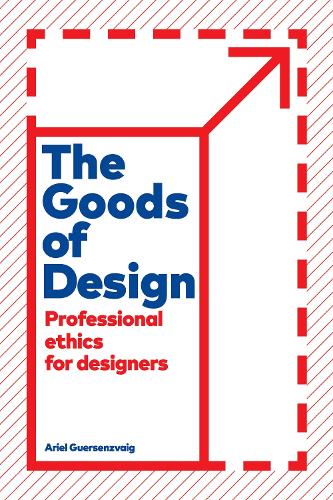
Книга The Goods of Design: Professional Ethics for Designers
What ends should designers pursue? To what extent should they care about the societal and environmental impact of their work? And why should they care at all? Given the key influence design has on the way people live their lives, designing is fraught with ethical issues. Yet, unlike education or nursing, it lacks widespread professional principles for addressing these issues.
Rooted in a communitarian view of design practice, this lively and accessible book examines design through the lens of professions, offering a critical vision that enables practitioners, academics and students of design in all disciplines to reflect on the practice’s overarching purposes. Considering how these are connected to others' flourishing and moulded by community interactions, "The Goods of Design" argues for a practice-based approach to cultivate professional ethics; it provides a normative direction that can meaningfully guide professional design activity, both individually and collectively. The volume also looks into the implications work has for the designer's self-growth as a person, offering ways to discover and navigate the complex tensions between personal and professional life.
"
Readers, take note! Despite the title's pun, this important book does not focus on the trending topics of the "stuff" or materiality of design. Instead, goods as used here references the ethics of design and design practice as viewed through the lens of virtue ethics. This approach, grounded in ancient philosophers such as Confucius and Aristotle, then elaborated by contemporary philosopher Alisdair MacIntyre, questions the nature of the good life and what sort of person one should be. This philosophically grounded treatise establishes the need for a professional ethics for designers, then authorizes and encourages designers to act ethically. Philosopher, design theorist, and educator Ariel Guersenzvaig offers a critical, much-needed examination of the relatively young profession of design, providing an overview of an ethics of design practice. Unlike manifesto authors, Guersenzvaig eschews oversimplification and ranting and instead proceeds at a measured pace, providing a philosophically reasoned argument with lively accessible language supported by deep and timely scholarly references. A noteworthy bibliography compiles and expands on these excellent resources with handy topical categorization. Educators will especially appreciate the coda, "Teaching Design Professional Ethics." Essential. All readers.
" - Choice Reviews