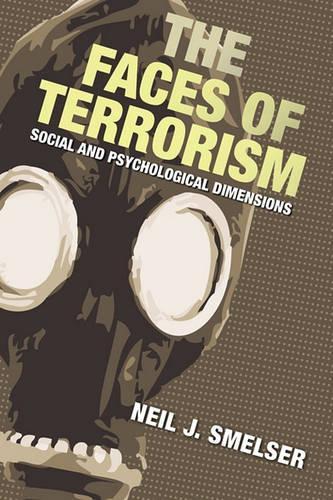
Книга The Faces of Terrorism: Social and Psychological Dimensions
This is a fine book, remarkably broad and encompassing in its sweep. One of its most important arguments--that social scientists are underrepresented in policy approaches to countering terrorism--is absolutely correct. -- Jerrold M. Post, editor of "The Psychological Assessment of Political Leaders" This is an excellent book. The topic is of great importance and the treatment of it will interest both academics and the public. Smelser effectively draws on his long and distinguished career to bring in diverse perspectives and literatures. -- Robert Jervis, Columbia University Highly accessible and engaging. This book is rich in insights and gives the reader a deep appreciation of the manifold phenomena involved in terrorism and the responses to terrorism on levels of the individual, the state, and the international community. -- Arie W. Kruglanski, University of Maryland This book, by one of the world's most renowned and thoughtful social scientists, seeks to demystify and illuminate our understanding of terrorism by bringing to bear on it relevant theoretical and empirical work in the behavioral and social sciences. It suggests that a thoroughgoing understanding of terrorism requires consideration not only of its causes and participatory dimensions but also of the target societies and their responses, and the role of the media in the process. -- David A. Snow, University of California, Irvine
Terrorism is the most clear and present danger we confront today, yet no phenomenon is more poorly understood by policymakers, the media, and the general public. The Faces of Terrorism is the first serious interdisciplinary examination of terrorism in all its facets. What gives rise to it, who are its proponents and how do they think, and how--and why--does it work? Neil Smelser begins by tackling the fundamental problem of defining what exactly terrorism is. He shows why a precise definition has eluded us until now, and he proposes one that takes into account the full complexities of this unconventional and politically charged brand of violence. He explores the root causes and conditions of terrorism, and examines the ideologies that inspire and fuel it throughout the world. Smelser looks closely at the terrorists themselves--their recruitment, their motivations, the groups they form, their intended audiences, and their uses of the media in pursuing their agendas. He studies the target societies as well, unraveling the complicated social and psychological impacts of having to cope with the ever-present threat of a terrorist strike--and responding when one occurs. He explains what it means to live under constant threat of terrorism, and addresses the thorny domestic and foreign policy challenges this poses. Throughout, Smelser draws from the latest findings in sociology, political science, anthropology, economics, psychology, psychiatry, and history. The Faces of Terrorism provides the breadth of scope necessary to understand--and ultimately eliminate--this most pressing global threat.