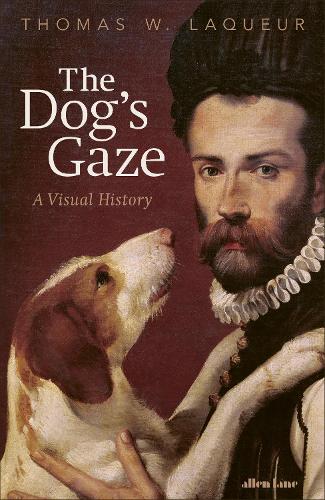
Книга The Dog's Gaze: A Visual History
What do dogs do in art? A dazzlingly original cultural history from the Cundill Prize-winning historian
Long before the phrase ‘man’s best friend’ became common parlance, dogs were already standing beside us in art as in life. In The Dog’s Gaze, the historian Thomas W. Laqueur invites us to explore why they feature more than any other animal in the ways in which we picture ourselves and our stories.
Dogs have been ubiquitous in the worldmaking of visual artists as far back as the Palaeolithic age. Looking across the western tradition, from Giotto to Goya and Rubens to Rego, Laqueur shows what their presence – as hunting partners, beloved friends and even conduits to the afterlife – reveals about our own ways of seeing and how we want to be remembered. Far from being mere motifs, dogs are an integral and intentional element of the images in which they appear: they provide narrative coherence; they look out and bear witness, often on the artist’s behalf; they illuminate our understanding of morality and melancholy and some, like us, become celebrities. Indeed, as the author shows, dogs in art are our social doppelgängers, our companions in looking and being.
Richly illustrated and lovingly written, The Dog’s Gaze is a unique visual history that examines the shared social history of our two species and offers fresh insights into the human condition through the eyes of our canine companions.
"Luminous ... Laqueur takes us on a wonderfully illustrated tour of dogs in art, from the shitting cur in Rembrandt’s etching The Good Samaritan to the Jeff Koons balloon dog, by way of cinema superstar Lassie. His special interest, though, is for those places where dogs are engaged in an act of looking ... by the end of this clever, beautiful book, Laqueur has persuasively made his point that the dog’s function in western art is to provide an entry-point or alter ego for viewers who might otherwise feel overwhelmed or outclassed ... [it is] a brilliant interpretation of their role at heart" - Guardian
"A splendid blend of histories: natural, cultural, and artistic . . . [A] sprawling examination of dogs in the history of art, from Neolithic cave paintings to present-day photographs and paintings . . . In a book filled with image after image of dogs in all sorts of artistic contexts, Laqueur provides other meaningful interpretations of the dog as a religious symbol, an avatar of the good home, a hunting companion, a faithful friend—and, in one terrifying instance, as a hellhound chasing runaway enslaved people. Laqueur spins fine anecdotes, such as one concerning Pablo Picasso’s beloved dachshund, Lump, of whom the artist remarked, 'He’s not a dog, he’s not a little man, he’s somebody else;' and his text is full of smart aperçus, such as speculation on why dogs figure so often in stories and images about death, for 'who more than the dead need protection, attention, and guidance?' . . . A delight for dog-loving art connoisseurs, and vice versa." - Kirkus Reviews