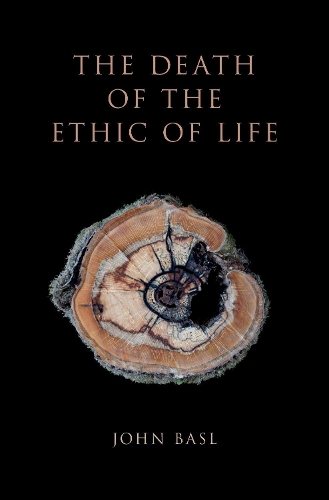
Книга The Death of the Ethic of Life
Many subscribe to an Ethic of Life, an ethical perspective on which all living things deserve some level of moral concern. Within philosophy, the Ethic of Life has been clarified, developed, and rigorously defended; yet it has also found its harshest critics. Between biocentrists, those that endorse the Ethic of Life, and those that accept a more restricted view of moral status, the debate has reached a standstill, with few new resources for shifting or complicating it. In The Death of the Ethic of Life, John Basl seeks to end this comfortable stalemate by emphasizing a simple truth: the well-being of non-sentient beings, such as plants, species, and ecosystems, is morally significant only to the extent that it matters to sentient beings. Basl first develops a version of The Ethic of Life that best meets traditional challenges: the Ethic, if it is to survive criticism, must be able to explain how it is that all living things have a welfare or a good of their own. The best hope of offering such an explanation is to ground that welfare in teleology or goal-directedness, and then to ground that goal-directedness in the workings of natural selection. While a naturalistic account of teleology is crucial to defending an Ethic of Life, it is also its downfall. This Ethic ultimately entails that not only are ecosystems and collectives morally considerable, but so, too, are artifacts: everything from can openers to computers. Basl shows that evaluation of the resources for distinguishing artifacts from organisms forces us to abandon, for good, the Ethic of Life. The Death of the Ethic of Life provides not only a new answer to a fundamental question in environmental ethics, but a new way to conceive of fundamental concepts and issues in debates over who or what matters from the moral point of view, with wide-ranging implications in the philosophy of technology and bioethics.
"With significant references to a variety of philosophical positions on the issue and also to contemporary bioscience research, this solid and accessible book advances the literature on the problem of moral status. ... Summing up: Recommended" - S. E. Forschler, CHOICE
"This is the most important book on biocentrism in a generation. Basl proposes a new account of biological interests designed to capture the interests of synthetic organisms as well as organisms produced through natural selection and evolution. The arguments here are scientifically well informed and exhibit Basl's typical philosophical care and clarity. This book is essential reading for anyone interested in philosophical accounts of the moral importance of life. I expect it to generate fruitful discussions for years to come." - Katie McShane, Professor of Philosophy, Colorado State University
"In clear, crisp prose, and with engaging and provocative arguments, John Basl puts forward the strongest case yet against the view that all living beings, and they alone, have moral status. While reports of the victim's death may be exaggerated, Basl has presented defenders of the ethic of life with a serious challenge if they are to stay the executioner's hand. Required reading for all those interested in who matters from the moral point of view, and why." - Stephen M. Gardiner, Professor of Philosophy and Ben Rabinowitz Endowed Professor of Human Dimensions of the Environment, University of Washington
"This book declares the death of biocentric individualism, the view that all and only individual living organisms are morally considerable. Basl first provides a useful review of argument strategies that proponents have used to defend the view. He then makes a compelling case that the view is untenable, because a plausible account of the interests of non-conscious organisms will imply both that certain 'collectives' of living organisms have interests and that artifacts do too. Basl's sophisticated critique will need to be addressed by any future proponent of biocentric individualism, and if a scholar is interested only in understanding where biocentric individualism came from and why it is a minority position in environmental ethics, then this book contains all that an environmental ethicist who isnt a champion of the view needs to know about it." - Gary Varner, Professor of Philosophy, Texas A&M University