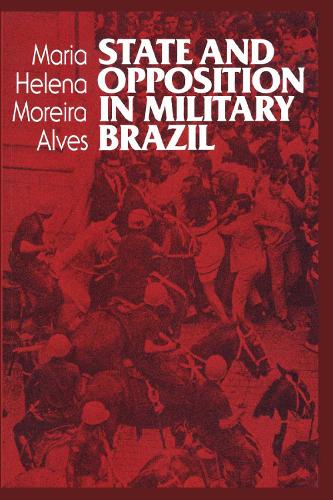
Based on extensive research into opposition and government documents, including the previously unavailable Manual Básico da Escola de Guerra, Maria Helena Moreira Alves provides a rich description of the long and tortuous attempt by the Brazilian military government to create a workable “national security state” in the face of determined and resilient opposition.
She interviewed more than one hundred key figures in government, the military, business, professional associations, the Catholic church, grassroots organizations, and trade unions in order to analyze politically and historically the relationship between civil society and government structures in Brazil during the years 1964–1983. Her study charts the rise and subsequent decline of the military government’s power, concluding with a discussion of the abertura policy instituted under General João Batista Figueiredo.
". . . a most welcome, thoroughly researched study, which makes an important contribution to the historiography of modern Brazil." - Hispanic American Historical Review
". . . superbly documents the negative consequences of two decades of military rule based in part on a sweeping doctrine of national security . . . . This is an outstanding account of how the opposition grew, and eventually came to share power." - Times of the Americas