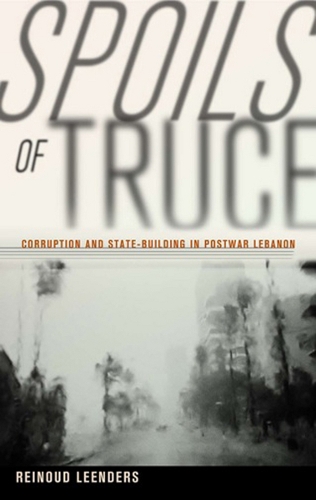
Книга Spoils of Truce: Corruption and State-Building in Postwar Lebanon
In Spoils of Truce, Reinoud Leenders documents the extensive corruption that accompanied the reconstruction of Lebanon after the end of a decade and a half of civil war. With the signing of the Ta’if peace accord in 1989, the rebuilding of the country’s shattered physical infrastructure and the establishment of a functioning state apparatus became critical demands. Despite the urgent needs of its citizens, however, graft was rampant. Leenders describes the extent and nature of this corruption in key sectors of the Lebanese economy and government, including transportation, health care, energy, natural resources, construction, and social assistance programs.
Exploring in detail how corruption implicated senior policymakers and high-ranking public servants, Leenders offers a clear-eyed perspective on state institutions in the developing world. He also addresses the overriding role of the Syrian leadership’s interests in Lebanon and in particular its manipulation of the country’s internal differences. His qualitative and disaggregated approach to dissecting the politics of creating and reshaping state institutions complements the more typical quantitative methods used in the study of corruption. More broadly, Spoils of Truce will be uncomfortable reading for those who insist that power-sharing strategies in conflict management and resolution provide some sort of panacea for divided societies hoping to recover from armed conflict.
In Spoils of Truce, Reinoud Leenders documents the extensive corruption that accompanied the reconstruction of Lebanon after the end of a decade and a half of civil war. With the signing of the Ta'if peace accord in 1989, the rebuilding of the country's shattered physical infrastructure and the establishment of a functioning state apparatus became critical demands. Despite the urgent needs of its citizens, however, graft was rampant. Leenders describes the extent and nature of this corruption in key sectors of the Lebanese economy and government, including transportation, health care, energy, natural resources, construction, and social assistance programs.
Exploring in detail how corruption implicated senior policymakers and high-ranking public servants, Leenders offers a clear-eyed perspective on state institutions in the developing world. He also addresses the overriding role of the Syrian leadership’s interests in Lebanon and in particular its manipulation of the country’s internal differences. His qualitative and disaggregated approach to dissecting the politics of creating and reshaping state institutions complements the more typical quantitative methods used in the study of corruption. More broadly, Spoils of Truce will be uncomfortable reading for those who insist that power-sharing strategies in conflict management and resolution provide some sort of panacea for divided societies hoping to recover from armed conflict.
"
One of the most disturbing legacies of the post-civil war experience in Lebanon has been the persistence of corruption in the country's sociopolitical institutions. In this well-researched book, Leenders... examines the myriad causes of corruption in the country.... [and] convincingly demonstrates how Lebanon's archaic political system perpetuates corruption.... Although the book's focus is on Lebanon, the author's theoretical arguments can be applied to the study of corruption in many other Arab countries. Summing Up: Highly recommended.
" - Choice"
Here is the most remarkable study day on the Lebanese political system and its operation since the end of the Civil War and the Taif Agreement.... This reads like a fascinating detective story except that it is real people who find themselves without care and without electricity, millions of dollars disappear into private pockets and a country that participated in sixes and sevens.
" - Journal of the Worlds Muslims and Mediterranean