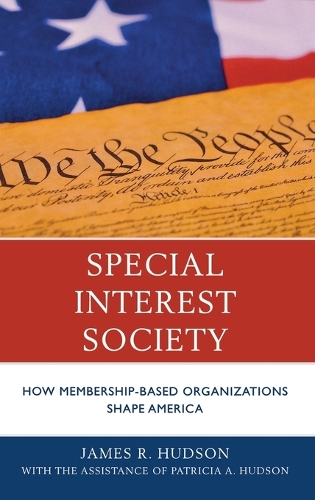
Книга Special Interest Society: How Membership-based Organizations Shape America
Voluntary associations have been ubiquitous in our society for hundreds of years. Efforts to develop a classification scheme have often overlooked one important segment: membership-based organizations (MBOs). MBOs are created voluntarily by a group of like-minded individuals who seek to advance their interests by organizing to promote and protect a specific domain. A number have earned the reputation for operating as “special interests.” To accept that notion would not be telling the full story and would overlook the many contributions they have made. A central thesis of Special Interest Society: How Membership-based Organizations Shape America is that no modern democratic society can function without them. With a focus on how they emerge and the steps they take to advance their mutual interests, the book also provides a sober account of how MBOs can be slow to accept important and necessary changes. It also reveals the less flattering role they have played in denying access or limiting acceptance to eligible individuals based on their race, gender, ethnicity, and more. In Special Interest Society, James R. Hudson analyzes over 400 published histories of MBOs to report on their emergence, growth, and development. Many provide essential services within our society of which we are unaware that we have come to rely upon. Employing several sociological theories, he explains why their actions have enabled these organizations to thrive in a democratic society as well as affect significant social change. Throughout, he demonstrates how open and democratic societies provide a fertile ground for their continued emergence. He explains why their numbers have increased over the last two hundred years as occupations and personal interests have become more specialized and complex. Written for students and scholars working in sociology, public policy, business, community development, and nonprofit management, as well as association professionals and their staff, this book provides an unparalleled insight into the history, purpose, and challenges of associations in America.
"This book is best classified as being part of historical sociology, as it feels dated. Hudson (emer., Penn State) himself admits in the preface that there might be controversy about using the human ecology framework for his analysis. But perhaps it is timely in light of the resurgence (in some circles) of acknowledging the validity of sociobiology. By nature, humans are social creatures, no less so when creating formal social organizations, which Hudson, with assistance from his wife, Patricia, note with analysis of an extensive list of professional organizations. In some cases, the purpose of membership organizations included in this list is amusing—e.g., the Prune Bargaining Association. Interest in this book should not be limited to students and scholars of social change. It should be of interest as well to those who identify themselves as organizational theorists and those exploring the concept of professionalism. Summing Up: Recommended. Graduate students, faculty." - CHOICE