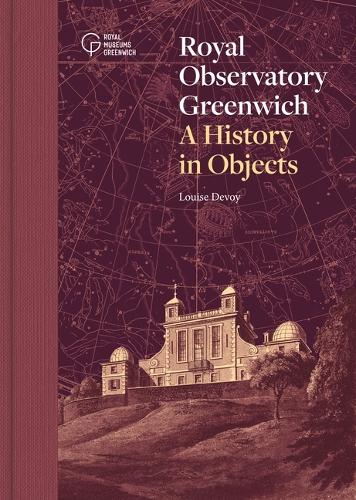
When King Charles II signed the royal warrant that led to
the founding of the Royal Observatory in 1675, it was to ensure that Britain
was not left behind other European nations as they pursued global trade and
resources. Now, in its 350th year, the 'small observatory within our park at
Greenwich' is perhaps the most famous such institution in the world, home to
the historic Prime Meridian of the World, 0 Degrees longitude, and an essential
reference on our clocks, watches, maps and globes.
The 100 objects contained within the pages of this book
highlight the many people, ideas and technologies that contributed to
'perfecting the art of navigation' and mapping the stars. They include some of
the most famous objects in the Royal Observatory's collection, like John
Harrison's pioneering timekeepers, the Great Equatorial Telescope and the
Shepherd Motor Clock, along with lesser-known items that document how our ideas
about time and space have changed over the centuries.
Instruments, photographs, plans and archival documents tell
the story of the Royal Observatory from its early days as Britain's first
state-funded purpose-built scientific institution, through periods of rapid
scientific and social change, all the way to its twilight years at the
forefront of astronomical research in the first few decades of the twentieth
century. Today, the Observatory is once more a working observing site but also
a heritage centre and home to London's only planetarium, seeking to inform and
inspire with stories of discovery, innovation and wonder.