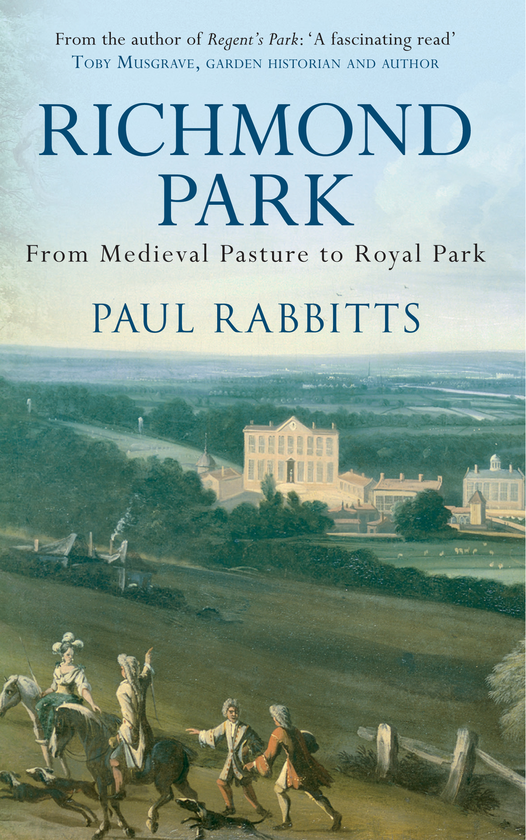
Richmond Park is the largest Royal Park in London, covering an area of 2,500 acres. From its heights there is an uninterrupted view of St Paul’s Cathedral, 12 miles away.
The royal connections to this park probably go back further than any of the others, beginning with Edward I in the thirteenth century, when the area was known as the Manor of Sheen. The name was changed to Richmond during Henry VII’s reign. In 1625 Charles I brought his court to Richmond Palace to escape the plague in London and turned it into a park for red and fallow deer. His decision, in 1637, to enclose the land was not popular with the local residents, but he did allow pedestrians the right of way. To this day the walls remain. In 1847 Pembroke Lodge became the home of the then Prime Minister, Lord John Russell, and was later the childhood home of his grandson, Bertrand Russell.
However, Richmond Park emerges from its historical record as a place that has seen many changes in fabric and detail and yet remains the embodiment of a medieval deer park. It is a palimpsest, retaining subtle clues to each period in its history.
- The
only up-to-date history of this fascinating park
- Richmond
Park attracts millions of visitors every year
- Covers
the entire chronological history of this much-loved park, including its origins
as a medieval pasture, its royal connections and its importance today as an
area of wildlife conservation and an oasis for Greater London
- Illustrated
with historic and modern images
- Reviews
in London press (e.g. Evening Standard, Metro) and specialist press
- Perfect
book for locals in the surrounding area