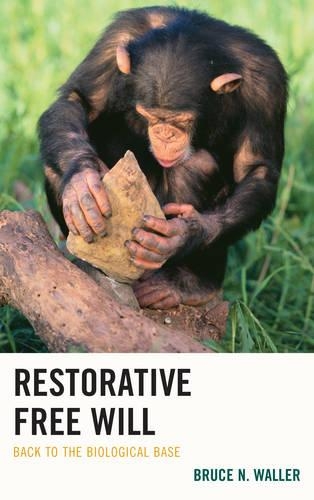
Restorative Free Will argues for an account of free will that takes seriously the evolutionary development of the key elements of free will. It emphasizes a biological understanding of free will that rejects the belief that free will belongs exclusively to humans and seeks to understand free will by examining it writ large in the adaptive behavior of many species. Drawing on resources from primatology, biology, psychology, and anthropology, Restorative Free Will examines the major compatibilist and libertarian accounts of free will, acknowledges their important insights while arguing that each view mistakenly treats an essential element of animal free will as if it were the full account of free will, and demonstrates how a broader biological approach to free will integrates those insights into a richer naturalistic free will account.
"I cannot recommend this book more highly. Questioning many contemporary assumptions about free will and moral responsibility, Waller's book is daring, thought-provoking, and a must-read for anyone interested in the free will debate. . . .Waller's account of restorative free will is original and provocative. It will give readers much to think about. His writing is clear, direct, often humorous, and always insightful . . . Waller raises important and difficult questions, forcing us to reconsider our assumptions about human uniqueness, moral responsibility, and free will." - Notre Dame Philosophical Reviews