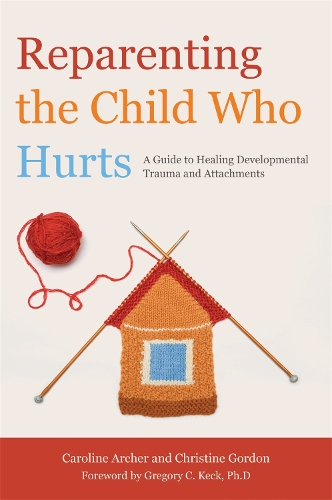
Книга Reparenting the Child Who Hurts: A Guide to Healing Developmental Trauma and Attachments
Demystifying the latest thinking on neurobiology, physiology and trauma and explaining what the research means for the everyday life of parents of children who hurt
Finally, a parenting book which demystifies the latest thinking on neurobiology, physiology and trauma and explains what the research means for the everyday life of parents of children who hurt.
As experts on adoption and fostering who are adoptive parents themselves, Caroline Archer and Christine Gordon explain how this knowledge can help parents to better understand and care for their child. They explain why conventional parenting techniques are often not helpful for the child who has experienced early trauma and explore why therapeutic reparenting is the only way to help repair the unhealthy neurobiological and behavioural patterns which affect the child's development. They do not shy away from how difficult reparenting is, acknowledging how hard it can be to recognise our own fallibility as parents and to change our own parenting patterns. The authors also offer hard-won advice on a range of common parenting flashpoints - from defusing arguments and aggression to negotiating bedtimes and breaks in routine, and making sure that special occasions are remembered for all the right reasons.
Reparenting the Child Who Hurts is a humane, no-nonsense survival guide for any parent caring for a child with developmental trauma or attachment difficulties, and will also provide information and insights for social workers, teachers, counsellors and other professionals involved in supporting adoptive and foster families.
"The authors, Caroline Archer and Christine Gordon, are both adoptive parents. The also have years of experience working professionally in adoption services and therapeutic teams... The book is primarily aimed at adoptive parents but would equally be of use to anyone who works with children who have experiences difficult and disrupted early stats to life, such as social workers, teachers and psychologists... The insights provided, which are linked to research, are offered in a way that are positive and reassuring for adoptive families... The appendices and resource section are a veritable gold mine of information... including contact details for organisations that can offer support, practical strategies, hand-outs and a glossary... The text give a comprehensive and insightful view into many of the unique aspect of parenting a child that has experienced trauma and is then place for permanence with an initially unfamiliar family." - Debate - British Psychological Society