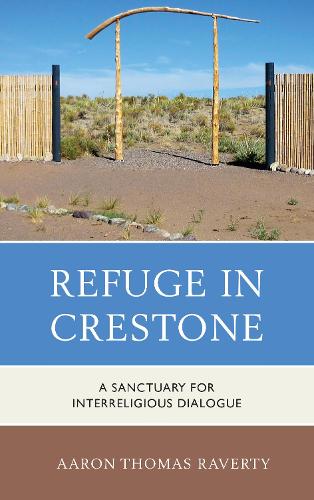
Книга Refuge in Crestone: A Sanctuary for Interreligious Dialogue
As globalization proceeds at an ever increasing and more unrelenting pace, relations among the world’s religions are taking on both a new visibility and a new urgency. Christian theologians and others intent on innovative formulations in the theology of religions are making interreligious dialogue with non-Christians a priority. One way to promote creative scholarship in this quest is to tap into interdisciplinary resources, and the author of this volume is uniquely qualified to do so since he holds graduate degrees in both theology and cultural anthropology. Aaron Thomas Raverty's Refuge in Crestone: A Sanctuary for Interreligious Dialogue elucidates how the praxis of interreligious dialogue, as outlined in key Vatican documents in the Catholic Church, could be better served by attending to the qualitative ethnographic methods of sociocultural anthropology. Because the material, behavioral, and cognitive aspects of dialogue—as revealed in daily life, common social and political action, religious experience, and theological exchange—are embedded in culture, they are amenable to ethnographic analysis. Using the unique, multi-religious Colorado site of Crestone and its environs as a fieldwork “laboratory” and self-described “Refuge for World Truths,” the ethnographic data gleaned from this project exemplify the creative interdisciplinary contributions of anthropology to theologizing. It seeks to demonstrate, using an empirical, multi-religious community as its focus, how anthropology can support interreligious dialogue. The results of such dialogue could not only assist the scholarly community by helping theologians arrive at new formulations in the burgeoning area of the theology of religions, but might also serve the more practical goal of promoting peace—as an alternative to violence—in today’s complex and sorely troubled world.
"The growing “field'...of interreligious studies ought to welcome Raverty’s contribution set forth in this book. He offers an interdisciplinary approach drawing on sociology, anthropology, ethnography, and theology. . . .This book is a welcome addition to the field of interreligious studies and serves as a solid ethnographic example of how the social sciences might contribute greatly to mapping the terrain of interreligious encounter in the contemporary world." - Monastic Interreligious Dialogue
"With a nod to New Age thinking and practices within globalized modernity, Raverty explores theoretical and practical contributions of the ethnographic method to interreligious dialogue, the sacred space of this geographical region, and the commodification of rituals and pilgrimage in the operation of a ritual economy…. Raverty finds innovative applications of many standard practices of cultural anthropology…to the context of interreligious dialogue. As well, he argues for the inclusion of gender considerations, cultural artifacts and material culture, and archival sources to enrich the practice of interreligious dialogue…. Thus, Raverty raises a range of ethnographic concerns emerging from his fieldwork in the sanctuary of Crestone, Colorado, with the aim of moving through enhanced interreligious dialogue to an inclusivist comparative theology." - American Anthropologist