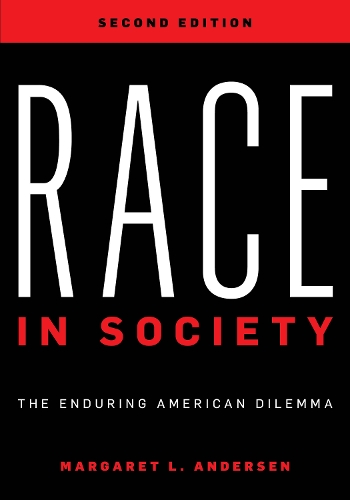
Comprehensive yet concise, Margaret Andersen’s Race in Society, Second Edition is a topical introduction to race and ethnicity organized around four key questions: What does the idea of race mean and where does it come from? What are the consequences of the social construction of race? How is racial inequality structured into social institutions? What are different policies and approaches for change toward racial justice? In her accessible, student-friendly style, Andersen introduces readers to the current scholarship on race, including recent studies conducted during the COVID-19 pandemic and the protests following the murder of George Floyd.
New to this edition:
New coverage of the effects of COVID-19 included throughout the book, including its impact on anti-Asian racism, violent crime, racial disparities in health care, and people of color in low wage service jobsExpanded discussion of immigration, including US politics about immigration and national borders displays the connection between immigration and racializationUpdated discussion of policing, police violence, and both historical and contemporary acts of vigilante “justice” against people of colorUpdated information on residential and educational segregation including new material on the racial achievement gap and the effects of school closures during the COVID-19 pandemic
"Overall, Race in Society presents the data necessary to develop students’ ability to think critically about the social implications of race . . . Students will undoubtedly develop an understanding of how race is both a permanent fixture and yet a malleable construct in society at the same time. Students will likely appreciate the frequent references to contemporary phenomena such as racialized emojis and the Fight for 15 Movement. By prioritizing the relevance of race and racism through the acknowledgment of how it interacts with other structures in society, students who engage with this textbook will undoubtedly establish a critical sociological imagination, one attuned to how social inequality exists while recognizing that it doesn’t have to persist." - Teaching Sociology