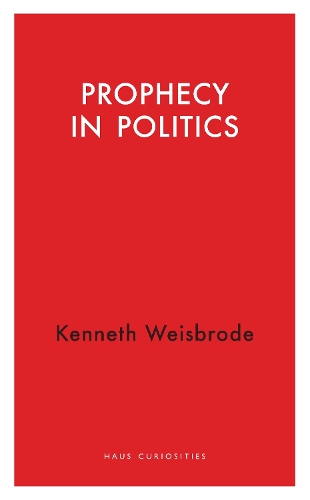
Книга Prophecy in Politics: Or, the Wigram Aspect
An original and engaging subject matter, prophecy inspires interesting discussion of many relevant topics like foresight, destiny, human behaviour.
Present an interdisciplinary approach, blending historical analysis with philosophical ideas and practical insightsA useful guide to thinking about the past and present condition of prophecy.
Few people remember Ralph Wigram. If he is known at all, it is as the Foreign Office official who warned Winston Churchill of the Nazi threat with such persistence, conviction, and hard evidence that Churchill had the wherewithal to make his case to the British people.
Prophets like Wigram are a fixture of a world without certainty. Oracles and fortune-tellers populate our myths and holy texts, and modern life is not short of forecasters, intelligence analysts, and threat-mongers. So how can we, and our leaders, know whose warnings to heed?
Reducing the well-worn subject of predicting the future to its most essential aspects, Weisbrode revisits significant incidents of prophecy, from Stalin’s dismissal of the warnings of German invasion to those given to successive US presidents about the terrorist threat in the years preceding 9/11. This idiosyncratic guide considers the past and present condition of prophecy, uncovering patterns of fear, complacency, and neglect.
Ralph Wigram was a minor British bureaucrat who is known to a small part of posterity only because Winston Churchill paid tribute to him as the man who warned of the Nazi threat with such persistence, conviction, and hard evidence that Churchill had the wherewithal to make the case to the British people. Wigram died at the end of 1936, just before the war he warned against had begun. He might have changed the course of history—if only people had believed him.
Prophets like Wigram are a permanent fixture of a world without certainty. Oracles, shamans, wiseacres, astrologers, and swamis of all shades populate our myths, legends, and Bibles. Today, our lives are inundated with the wisdom of professional forecasters, intelligence analysts, and threat mongers. Why do many of us, and especially our leaders, find it so difficult to heed warnings? We tend to underreact to some, overreact to others, and then point fingers when what “nobody ever anticipated” comes to pass. Why is prophecy so dogged?
Prophecy in Politics takes up a vast, complex, and well-worn subject—the future—and reduces it to its most essential aspects, especially belief. It revisits a half-dozen familiar and not-so-familiar incidents of prophecy, from the warnings given to Stalin about Operation Barbarossa to those given to Bill Clinton and George W. Bush about “terrorism,” to the Cassandras periodically promising collapse in the financial markets, to uncover a pattern of complacency and neglect. Finally, Ken Weisbrode proposes what all of us might do to overcome complacency and make prophecy work better for us. This is not a handbook or an attempt to stand in the vanguard of political or strategic thought on futurism, futures studies, or futurology; rather, it is a concise overview and an idiosyncratic but nevertheless useful guide to thinking about the past and present condition of prophecy.