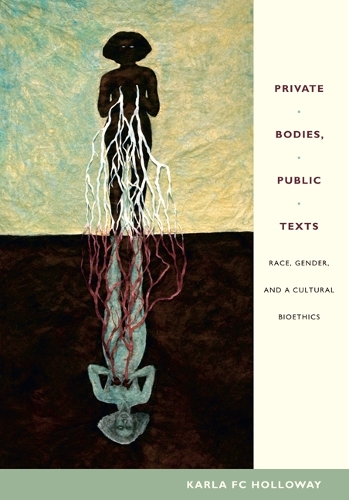
Книга Private Bodies, Public Texts: Race, Gender, and a Cultural Bioethics
How blacks and women have been mistreated by the American medical establishment
In Private Bodies, Public Texts, Karla FC Holloway examines instances where medical issues and information that would usually be seen as intimate, private matters are forced into the public sphere. As she demonstrates, the resulting social dramas often play out on the bodies of women and African Americans. Holloway discusses the spectacle of the Terri Schiavo right-to-die case and the injustice of medical researchers’ use of Henrietta Lacks’s cell line without her or her family’s knowledge or permission. She offers a provocative reading of the Tuskegee syphilis study and a haunting account of the ethical dilemmas that confronted physicians, patients, and families when a hospital became a space for dying rather than healing during Hurricane Katrina; even at that dire moment, race mattered. Private Bodies, Public Texts is a compelling call for a cultural bioethics that attends to the historical and social factors that render some populations more vulnerable than others in medical and legal contexts. Holloway proposes literature as a conceptual anchor for discussions of race, gender, bioethics, and the right to privacy. Literary narratives can accommodate thick description, multiple subjectivities, contradiction, and complexity.
"“Private Bodies, Public Texts is a creative and complicated call to do bioethics differently. . . . Holloway's encyclopedic collection of legal and bioethical cases, melded with captivating fiction and discriminating analyses, make this book nourishing sustenance for anyone who believes that bioethics has a way to go in understanding not only that race and gender matter but also how they matter.”" - Women's Review of Books
"“Holloway’s book is undoubtedly a significant achievement, especially in its deep exposition of how racial and gender constructs shape and frame attitudes, practices, and beliefs towards the value of privacy in medicine and science. Scholars using tools drawn from narrative and cultural studies in bioethical inquiry will find in Holloway’s approach a model for the potential of such frameworks to enrich and thicken bioethical analysis and a road map for important and developing modalities in second-generation American bioethics.”" - Journal of Medical Humanities
"“In her exceptional book, Holloway turns to literature to ‘illustrate matters of ethical concern and to assist listeners in hearing a patient’s story, in order to develop a more thoughtful perspective on treatment.’ . . . Holloway offers incisive comments that relate fictional episodes to real-life events, enhancing the ability of both to reveal the deep connections that bind ethics to culture, race, and gender. Private Bodies, Public Texts invites health professionals, lawyers and ethicists to honor those connections.”" - Foreword Reviews
"“The strength of Private Bodies, Public Texts is that it effectively demonstrates how the moral subject of bioethics is universal and impartial only insofar as it assumes the perspective of white, middle-class men.”" - Signs
"‘[Holloway] offers a cultural bioethics that may be able to help us understand and navigate the complex narratives we are co-creating.”
" - News & Observer
"“...Holloway’s Private Bodies, Public Texts, is a tour de force of interdisciplinary analysis...All of Holloway’s disciplinary investments are evident in this book, as she deftly weaves between works of American literature, landmark cases in American legal history, and moments in the history of American medical experimentation to advance her argument.”" - American Literature