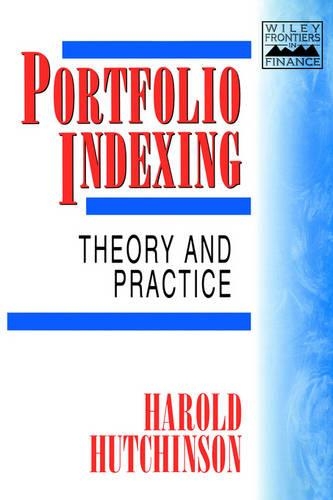
Книга Portfolio Indexing: Theory and Practice
The dominant paradigm in modern-day fund management remains the Capital Asset Pricing Model (CAPM). Originally developed in the 1960s as an explanatory and predictive model of capital market behaviour, it has subsequently acquired enormous significance in many fund-management institutions.
"Harold Hutchinson's Portfolio Indexing is a long-overdue theoretical and practical perspective on the 'managers versus trackers' debate. He concludes that the indexing solution to risk management is flawed and that individual judgment will always have a proper role to play in investment. This much-needed book will hopefully help to stop the current steam-rolling move of the fund management industry towards indexing in its tracks, and encourage a more balanced view of the benefits of the active manager, especially in volatile or falling markets." Phillip Keane, Director, Industrial Bank of Japan Asset Management International Ltd
"Portfolio Indexing challenges the growing consensus in favour of portfolio indexing as the optimal investment strategy. His devastating criticisms of the theoretical foundations underlying indexing, and his plea for a more modest inductive approach to portfolio management, have huge and as yet untapped implications for the asset management industry." Dr Andrew Allan, Vice President, Salomon Smith Barney
Professionals, students and amateur investors alike will profit from this enjoyable tract on how to maintain and navigate vehicles of investment.CAPM (Capital Asset Pricing Modell) ist ein Verfahren zur Ermittlung des Risiko-Rendite-Austauschverhältnisses von Finanzanlagen, wobei der unterschiedliche Risikogehalt verschiedener Finanztitel berücksichtigt wird. Eingesetzt wird dieses Verfahren überwiegend im modernen Fondsmanagement. Ursprünglich entwickelt als Modell zur Erläuterung und Prognose des Kapitalmarktverhaltens, hat CAPM jedoch mittlerweile eine enorme Bedeutung für Fondsmanager erhalten und ist ebenso populär wie umstritten. Dies ist das erste Buch, das systematisch die Schwachpunkte im Bereich indexgebundener Portefeuilles analysiert und alternativ einen indexunabhängigen Ansatz anbietet, d.h. Vermögensverwaltung eines Portefeuilles das sich nicht aus Aktien zusammensetzt, die auf einem Index basieren. Enthalten sind viele wichtige Beispiele aus der Praxis und dem Erfahrungsschatz des Autors sowie Informationen zu aktuellen globalen Entwicklungen. (07/99)