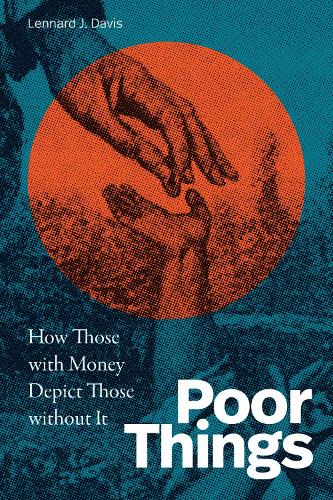
For generations most of the canonical works that detail the lives of poor people have been created by rich or middle-class writers like Charles Dickens, John Steinbeck, or James Agee. This has resulted in overwhelming depictions of poor people as living abject, violent lives in filthy and degrading conditions. In Poor Things, Lennard J. Davis labels this genre “poornography”: distorted narratives of poverty written by and for the middle and upper classes. Davis shows how poornography creates harmful and dangerous stereotypes that build barriers to social justice and change. To remedy this, Davis argues, poor people should write realistic depictions of themselves, but because of representational inequality they cannot. Given the obstacles to the poor accessing the means of publication, Davis suggests that the work should, at least for now, be done by “transclass” writers who were once poor and who can accurately represent poverty without relying on stereotypes and clichés. Only then can the lived experience of poverty be more fully realized.
"“Lennard J. Davis has little to no faith in the ability of middle-class writers to write about poor people without relying on stereotypes. Using a personal narrative, so important to working-class academic writing, allows Davis to convincingly argue that a purely structural class critique is insufficient because such critique typically overlooks the realities of the lived experience of poverty. Therein lie the stakes of his book: that novels written by people in poverty can act as a cultural brake on the social dynamics by which the moneyed and the impoverished are, right now, pulled so violently apart.”" - Poor Queer Studies: Confronting Elitism in the University