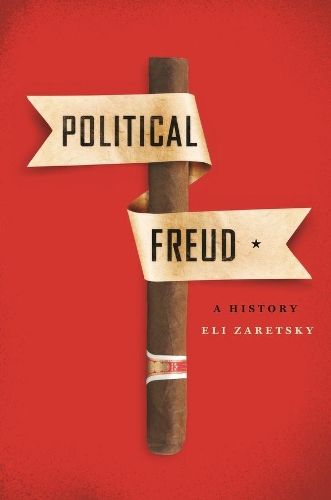
Книга Political Freud: A History
Political Freud is Zaretsky's account of the way twentieth century radicals, activists, and thinkers used Freudian thought to understand the political developments of their century. Zaretsky shows how important political readings of Freud were to the theory of fascism and the experience of the Holocaust, the critical role they played in African American radical thought, particularly in the struggle for racial memory, and in the rebellions of the 1960s and their culmination in feminism and gay liberation.
In this masterful history, Eli Zaretsky reveals the power of Freudian thought to illuminate the great political conflicts of the twentieth century. Developing an original concept of "political Freudianism," he shows how twentieth-century radicals, activists, and intellectuals used psychoanalytic ideas to probe consumer capitalism, racial violence, anti-Semitism, and patriarchy. He also underscores the continuing influence and critical potential of those ideas in the transformed landscape of the present. Zaretsky's conception of political Freudianism unites the two overarching themes of the last century-totalitarianism and consumerism-in a single framework. He finds that theories of mass psychology and the unconscious were central to the study of fascism and the Holocaust; to African American radical thought, particularly the struggle to overcome the legacy of slavery; to the rebellions of the 1960s; and to the feminism and gay liberation movements of the 1970s. Nor did the influence of political Freud end when the era of Freud bashing began. Rather, Zaretsky proves that political Freudianism is alive today in cultural studies, the study of memory, theories of trauma, postcolonial thought, film, media and computer studies, evolutionary theory and even economics.