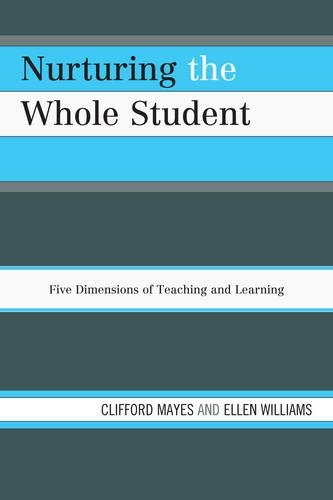
Книга Nurturing the Whole Student: Five Dimensions of Teaching and Learning
Nurturing the Whole Student: Five Dimensions of Teaching and Learning begins with the assumption that education is at its best—healthiest, most engaging, and most effective—when it is holistic. By holistic , the authors mean that the various dimensions of the teacher and student are honored and nurtured throughout the education process. These dimensions are organic, psychodynamic, cultural, academic, and existential. Nurturing the Whole Student contends that any truly humane educational theory or practice must celebrate and cultivate these facets of the student-teacher relationship. In readily-accessible theoretical terms—as well as in practical suggestions for classroom application—the authors demonstrate how holistic education is an antidote to the standardized approaches to education that breed failure, alienation, and discouragement in the classroom. Systematically broken down into five thematic chapters, this teacher's guide will help any educator foster the five dimensions of teaching and learning.
"Healthy development occurs when individuals are supported in expressing ideas and feelings, and are able to develop a sense of competence and forge a meaningful place for themselves in the world. In order to provide an image of healthy development within school settings, five dimensions for optimal development are introduced: the organic, the psychodynamic, the affiliative, the procedural, and the existential. If one area is not well tended, then the whole child will suffer. The organic dimension emphasizes the importance of individual interactions with the world through the senses. The psychodynamic dimension highlights the importance of affect in the lives of students and teachers within the classroom. The affiliative dimension focuses upon the multiple cultures and expectations that may coexist within a classroom and the importance of differing perspectives within educational practice. The procedural dimension stresses the role of teacher and student in developing a sense of competence through teaching and learning. The existential dimension underscores the importance of providing opportunity and supporting students and teachers in making meaning in and for their lives. Each chapter consists of a theoretical introduction to the specific dimension and practical ideas for the practicing teacher. Summing Up: Recommended. General readers, undergraduate students, and professionals." - CHOICE