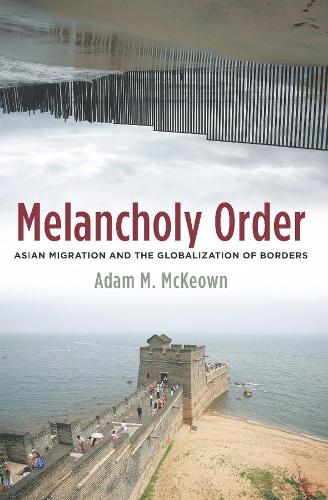
Книга Melancholy Order: Asian Migration and the Globalization of Borders
As Adam M. McKeown demonstrates, the push for increased border control and identity documentation is the continuation of more than 150 years of globalization. Modern passports and national borders are not only inseparable from the rise of global mobility. They are also tied to the emergence of individuals and nations as the primary sites of global power and identity. McKeown's history links the practices of border control to attempts to control Asian migration around the Pacific in the 1880s. New policies to control mobility had to be justified in the context of contemporary liberal ideas of freedom and mobility, generating such principles as the belief that migration control is a sovereign right of receiving nations and that it should occur at a country's borders. McKeown shows how the enforcement of these border controls required migrants to be extracted from social networks of identity and reconstructed as isolated individuals within centralized filing systems. Methods originally created to exclude Asians from full participation in the "family of civilized nations" are now the norm between all nations and have helped to institutionalize global cultural and economic divisions, such as East/West and First and Third World designations.
As Adam M. McKeown demonstrates, the push for increased border control and identity documentation is the continuation of more than 150 years of globalization. Not only are modern passports and national borders inseparable from the rise of global mobility, but they are also tied to the emergence of individuals and nations as the primary sites of global power and identity. McKeown's detailed history traces how, rather than being a legacy of "traditional" forms of sovereignty, practices of border control historically rose from attempts to control Asian migration around the Pacific in the 1880s. New policies to control mobility had to be justified in the context of contemporary liberal ideas of freedom and mobility, generating principles that are taken for granted today, such as the belief that migration control is a sovereign right of receiving nations and that it should occur at a country's borders. McKeown shows how the enforcement of these border controls required migrants to be extracted from social networks of identity and reconstructed as isolated individuals within centralized filing systems. Methods for excluding Asians from full participation in the "family of civilized nations" are now the norm between all nations. These practices also helped institutionalize global cultural and economic divisions, such as East/West and First and Third World designations, which continue to shape our understanding.