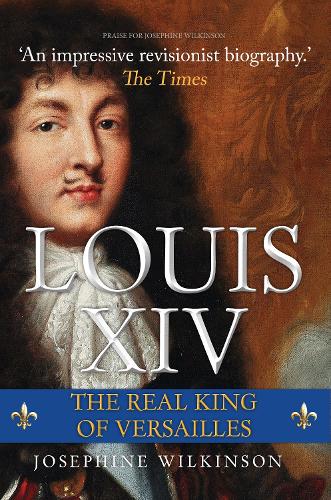
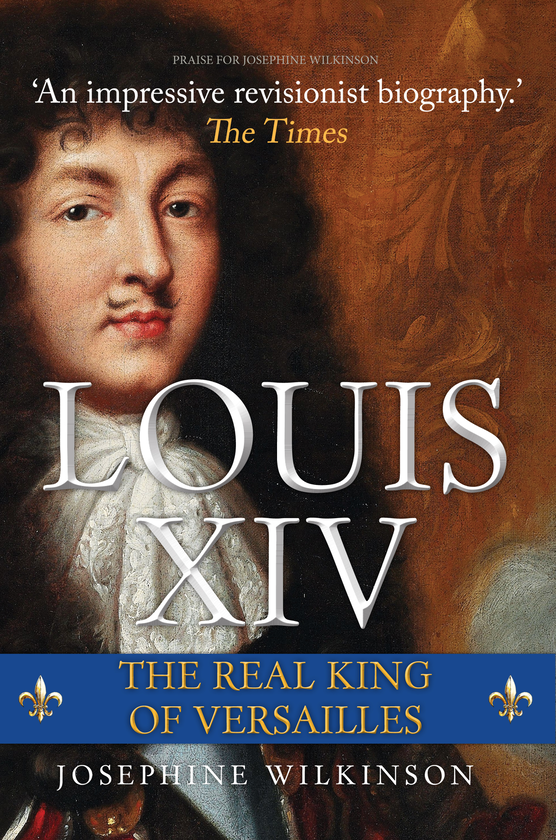
Louis XIV’s story has all the ingredients of a Dumas classic: legendary beginnings, beguiling women, court intrigue, a mysterious prisoner in an iron mask, lavish court entertainments, the scandal of a mistress who was immersed in the dark arts, and a central character who is handsome and romantic, but with a frighteningly dark side to his character.
Louis believed himself to be semidivine. His self-identification as the Sun King, which was reflected in iconography of the sun god, Apollo, influenced every aspect of Louis’s life: his political philosophy, his wars, and his relationships with courtiers and subjects.
As a military strategist, Louis’s capacity was debatable, but he was an astute politician who led his country to the heights of sophistication and power – and then had the misfortune to live long enough to see it all crumble away. As the sun began to set upon this most glorious of reigns, it brought a gathering darkness filled with the anguish of dead heirs, threatened borders, and a populace that was dangerously dependent upon – but greatly distanced from – its king.
- The BBC's drama 'Versailles' has pulled in 1-2 million viewers over three years.
- A new biography for readers of Antonia Fraser and Arabella Weir.
- Josephine Wilkinson's last book was published by John Murray.
- 'Louis the Great', the 'Sun King', epitomises royal power and Voltaire called his reign history's greatest. He ruled when France was Europe's greatest power and reigned for 75 years.