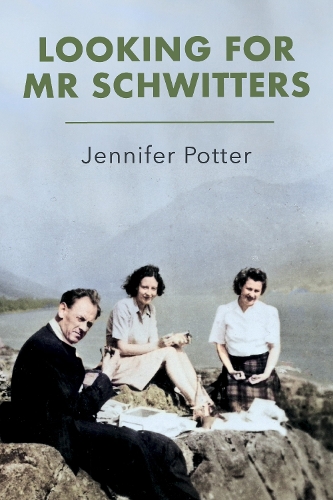
Jennifer Potter's new book
resurrects the pivotal artist Kurt Schwitters and places him firmly in The Lake
District, where he lived as a penniless refugee in the years after the Second
World War. Derided as a 'degenerate artist' by the Nazis he fled Germany for
Norway and then Britain, where he was interned as an 'enemy alien.' At the end
of the war he travelled to the Lakes with his young English girlfriend. Renowned
for incorporating found objects and rubbish into his art, Schwitters let the
spirit of the Lakes creep into his work, dashing off a stream of collages,
sculptures, landscapes, portraits, flowers, abstracts and assemblages, which he
sold or bartered for essentials. Just months before his pauper's death in
Kendal, he embarked upon his last masterpiece, never finished, a walk-in
sculpture magicked from a disused barn in the Langdale Valley.
Potter adopts a thread of
memory and personal connections to tell a wider story about the process of
making, and seeing, art. She turned Schwitters into one of the foundational
myths of her life as a writer. But how true are her memories? Why did this long
dead emigre artist take control of her imagination? And what can he tell
her about the place she looks on as home? Looking for Mr Schwitters is
not a biography, nor an art book, nor a memoir, but occupies a beguiling space
between these genres, a book in its own class. Rigorously researched but
written for the general reader this new book shines a light on the artist's
final years and reclaims his rightful place in the history of modern art.
Looking for Mr Schwitters includes black and white images, a full colour section of Kurt Schwitters' art and a photo essay by Rob Petit.