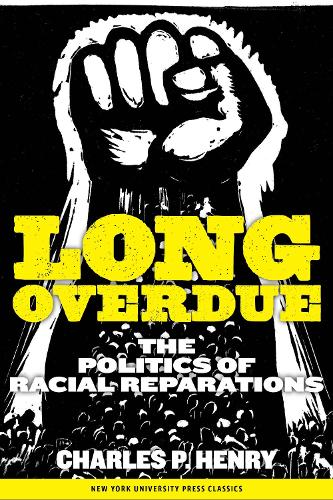
Книга Long Overdue: The Politics of Racial Reparations
Provides a history of the reparations struggle, with an eye toward understanding the political undercurrents, players, and arguments at work
An investigation of America’s failure to atone for the wrongs of slavery
Ever since the unfulfilled promise of “forty acres and a mule” after the Civil War, America has consistently failed to compensate Black Americans for the wrongs of slavery. Exploring why America has struggled to confront the issue of racial injustice, Long Overdue provides a history of the racial reparations movement and shows why it is more relevant now than ever.
Through an examination of Americans’ unwillingness to address economic injustice, Charles P. Henry crafts a skillful moral, political, economic, and historical argument for African American reparations, focusing on successful political cases. In the wake of successes in South Africa and New Zealand, new models for reparations have found traction in a number of American cities and states, from Dallas to Baltimore and Virginia to California. By looking at other dispossessed groups—Native Americans, Holocaust survivors, and Japanese internment victims in the 1940s—Henry shows how some groups have won the fight for reparations, and explores new ways forward for Black Americans.
From Hurricane Katrina to Hurricane Harvey, the events of the 21st century continue to show that the legacy of racial segregation and economic disadvantage is never far below the surface in America. As the issue of reparations is brought to the national stage by figures such as Ta-Nehisi Coates and Kamala Harris, Long Overdue provides a must-read survey of the political and legislative efforts made toward reparations over the course of American history, and offers a new path toward establishing equality for all Black Americans.
"Henrys work is really one designed to facilitate and urge political mobilization through a change in the culture and politics of reparations." - Journal of American History
"Long Overdue offers one of the finest and most comprehensive discussions to date of the historical and international context for reparations claims on behalf of African Americans by explaining why reparations are rejected and describing the barriers facing those who ask for them." - Journal of American Ethnic History