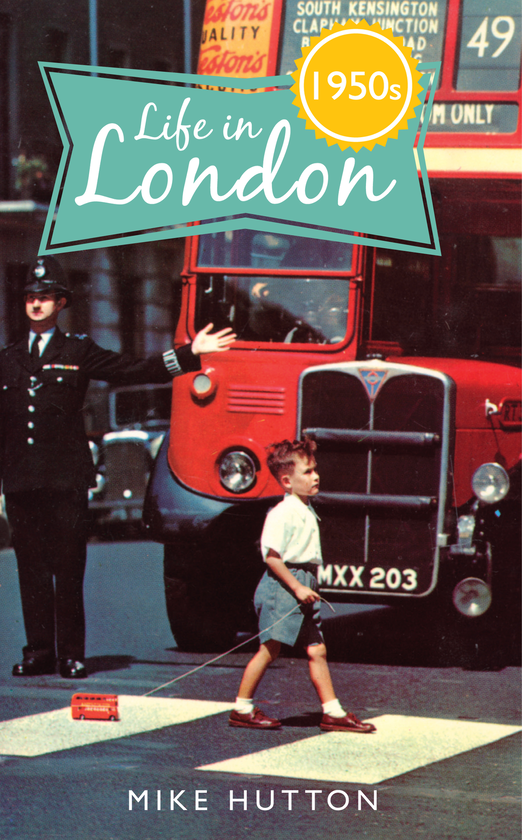
After the trauma of the Blitz and wartime restrictions, London embraced the arrival of a new decade. Austerity was slow to loosen its grip, but the Festival of Britain pointed a tentative way forward. Two years later saw the birth of a new Elizabethan era that was greeted with an almost naïve enthusiasm.
This was a time when class still dominated and divided. Despite the introduction of the welfare state, grinding poverty still existed. The rich were also suffering under a barrage of punitive taxation. The artistic community set out to challenge the bounds of perceived decency. As always, London spearheaded change.
To a background of grisly murders and organised crime, often shrouded in fog, London lurched into the unknown. It was loud, brash and chaotic, yet also sophisticated. A city of opportunity and dangerous temptation, it set the agenda for others to follow. Huge success and degrading humiliation were of passing interest only as the world’s greatest city hurled itself restlessly forward seeking its next distraction.
- The 1950s is the new
nostalgia market, hence the popularity of shows like Call the Midwife, set in the East End of London
- Includes austerity,
the Festival of Britain, the Coronation, and changes in fashion and
entertainment – London has always been at the cutting edge
- Reviews in the London
press (including the Evening Standard and Metro) and history magazines
- Reviews in broadsheet
newspapers to include The Times and the Guardian