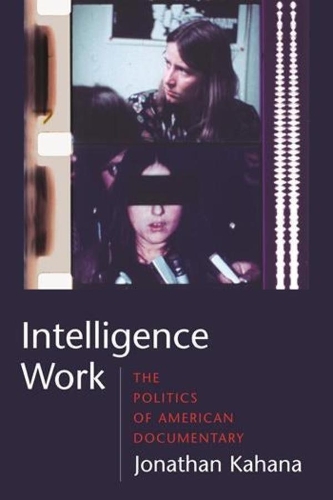
Книга Intelligence Work: The Politics of American Documentary
Jonathan Kahana makes a cogent case for thinking about the 'intelligence work' of documentary as an extension of the public sphere. His take on documentary pushes still further, arguing that the form's less obvious debt and contribution to 'abstraction' and 'allegory' reshape the contours of modern political discourse. A highly readable intervention surveying both classics and obscure films, Intelligence Work offers a truly important contribution to the field of documentary film studies. -- Paula Rabinowitz, Samuel Russell Chair in the Humanities, University of Minnesota Although the argument of the book proceeds logically and linearly from the 1930s to the present, the most intriguing organizational path of the manuscript is dialectical. Engaging larger theoretical issues about public and counter-public spheres, film genres, authorial and writerly voices, and allegories of history (to name a few), the book moves in and out of specific social, industrial, and aesthetic contexts to delineate precise configurations of the political possibilities of documentary cinema. -- Timothy Corrigan, professor of cinema studies, English, and history of art, University of Pennsylvania Our national debates over the role of government, the power of the media, and the pursuit of civil rights and human liberty have taken shape and received profound inflections in documentary film. Intelligence Work traces the dialogue between film form and social policy over almost a century of American history. Jonathan Kahana offers a unique angle on social history and documentary film practice that enriches our understanding of both. -- Bill Nichols, San Francisco State University, author of Introduction to Documentary Intelligence Work convincingly makes the case that the social or political documentary is a form of abstraction in its own right: it mediates between particular and local experiences, 'fragments of social reality,' and broader publics. Through nuanced and elegant readings of non-fiction films from the New Deal to present-day documentary successes, Kahana brings the phantom realities of American public life into light, showing how 'intelligence work' is done by both the cinema and the state in the exercise and contestation of power. A serious study of how the emancipatory energies of social documentary might inspire formal and technological innovation, and vice versa. -- Amy Villarejo, Cornell University Intelligence Work is destined to become part of the canon of crucial works about American documentary cinema. Cleverly engaging the political questions regarding the public discourse of documentary, Kahana explains some of the most important reasons we care about documentary. He manages to address these questions across the entire history of the genre, demonstrating a rare model of 'intelligence' at 'work'! -- Linda Williams, professor of film studies, University of California, Berkeley
Intelligence Work establishes a new genealogy of American social documentary, proposing a fresh critical approach to the aesthetic and political issues of nonfiction cinema and media. Jonathan Kahana argues that the use of documentary film by intellectuals, activists, government agencies, and community groups constitutes a national-public form of culture, one that challenges traditional oppositions between official and vernacular speech, between high art and popular culture, and between academic knowledge and common sense. Placing iconic images and the work of celebrated filmmakers next to overlooked and rediscovered productions, Kahana demonstrates how documentary collects and delivers the evidence of the American experience to the public sphere, where it lends force to political movements and gives substance to the social imaginary.