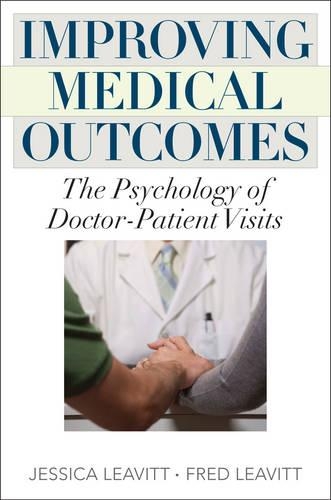
Книга Improving Medical Outcomes: The Psychology of Doctor-Patient Visits
The problems faced by medical doctors and automobile mechanics are in some ways quite similar—something isn't working right and must be fixed. They must both figure out the cause of malfunctions and determine the appropriate treatments. Yet, the mechanic has no need to worry about an automobile's psyche; the specific mechanical factors are the only ones that come into play. In health care, however, the factors influencing outcomes are broader, more complicated, and colored by the underlying psychological factors of those involved. These factors have profound effects. Doctors are often influenced by patients' description of symptoms, yet information is often incomplete or inaccurate or colored by the patient's own experiences. The doctor's own demeanor may greatly affect outcomes, as can the doctor's ability to interpret the ever-expanding medical literature. These underlying influences are often not acknowledged, and yet they can have far-reaching consequences. Acknowledging these psychological factors and learning how to overcome them are the first steps in improving communications between doctors and patients and to improving diagnosis and treatment. Here, the authors offer strategies for remedying the situation and moving forward to a better understanding of doctor-patient visits and their outcomes.
"Jessica Leavitt (member, California Board of Vocational Nursing & Psychiatric Technicians) and Fred Leavitt (psychology, California State Univ.; Evaluating Scientific Research) outline the psychological aspects of doctor-patient relationships and how they affect medical care. While aimed mostly at health-care providers and medical students, the book is accessible to consumers and can be a source of valuable information. It covers major areas of doctor-patient communication, including interpretation of medical information, decision making and bias, medical diagnosis and reducing diagnostic errors, prescribing drugs, the placebo effect, complementary and alternative medicine, and patient social-connectedness. The Leavitts show some of the pitfalls in communicating effectively with patients, making diagnostic decisions, interpreting medical information, and prescribing medication. Throughout, they alert physicians to these hazards and offer tips to help avoid them. Each chapter also concludes with a short list of tips for the patient. VERDICT Recommended for health-care providers, medical students, and doctors—this may be a source of interest to general readers with upcoming doctor’s appointments." - Library Journal
"Jessica and Fred Leavitt's book, Improving Medical Outcomes, is an ambitious and far-reaching effort to suggest ways of delivering better health outcomes in a wide variety of areas....The Leavitts... identify physicians as well as patients as their target audience....Meticulously researched....Improving Medical Outcomes offers a pragmatic and useful approach for physicians as well as patients interested in doing exactly what its title proposes. Implementing even some of its suggestions will likely have this effect and, by extension, will likely increase the value of care provided, benefiting not only individuals but society as well." - JAMA: The Journal of the American Medical Association
"In a succinct organized fashion the authors aim to improve medical outcomes by highlighting common errors made by clinicians and offering solutions. . . .I loved this book! This well-written, well-researched book will be required reading for my faculty development fellows. I believe it truly will improve medical outcomes for your patients and for your learners’ patients." - Family Medicine