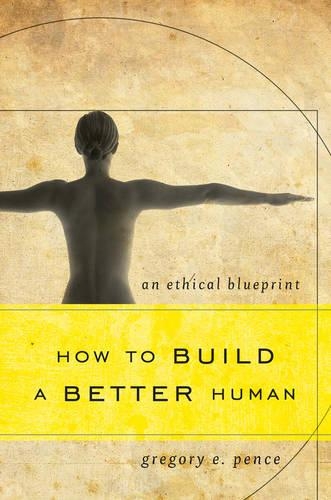
Книга How to Build a Better Human: An Ethical Blueprint
Medicine has recently discovered spectacular tools for human enhancement. Yet to date, it has failed to use them well, in part because of ethical objections. Meanwhile, covert attempts flourish to enhance with steroids, mind-enhancing drugs, and cosmetic surgery—all largely unstudied scientifically. The little success to date has been sporadic and financed privately. In How to Build a Better Human, prominent bioethicist Gregory E. Pence argues that people, if we are careful and ethical, can use genetics, biotechnology, and medicine to improve ourselves, and that we should publicly study what people are doing covertly. Pence believes that we need to transcend the two common frame stories of bioethics: bioconservative alarmism and uncritical enthusiasm, and that bioethics should become part of the solution—not the problem—in making better humans.
"In How to Build a Better Human, Greg Pence, a medical ethicist, argues that careful, ethical people can use genetics, biotechnology and medicine to improve themselves. To do this, he believes that we must refuse to reject or embrace these advances without careful consideration. In doing so, bioethics can become part of the solution instead of the problem." - UAB - News from University of Alabama at Birmingham
"Bioethicist Pence (philosophy, Univ. of Alabama) addresses two extremely interesting and controversial topics in this thought-provoking work. The first illuminates the somewhat silent world of human enhancement. The second focuses on how the discipline of ethics in many cases resists these advances because of its preexisting paradigm which wrongly groups the very efforts that can improve humankind. The book provides several detailed cases of human enhancement activities along with where their trajectory is headed. For example, Pence describes the use of an FDA-approved medication that stimulates wakefulness. But in the situation presented, a student uses the drug to improve studying for the bar exam. Indeed, the drug is legal but was not designed for this purpose. And herein lies an ethical dilemma: is it acceptable to improve cognitive function through an off-label use of a drug? The book also shows how incorrectly clumping ethical problems leads to wrong outcomes. The author uses many examples to prove the point that ethics and human enhancement can coexist if the ethics community applies its principles specifically to each case. After reading this work, it is not hard to see that the improbable future depicted in the movie Total Recall is just over the horizon. Summing Up: Recommended. All academic students and general audiences." - CHOICE