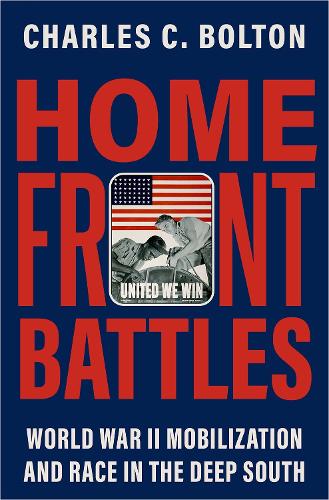
Книга Home Front Battles: World War II Mobilization and Race in the Deep South
Mobilization for World War II disrupted life in the Deep South of the United States, sparking new-and, in some cases, reigniting old-battles across the home front. Rural migrants flocked to towns and cities, hoping to take advantage of new war-related job opportunities. Wealthy landowners attempted to wield their enormous power to keep farm workers on the land, especially Black tenants and wage hands who provided much of the essential labor. Towns that attracted wartime industries, such as Pascagoula, Mississippi, which exploded with new demand for its shipbuilding industry, grew exponentially and quickly, making the men who owned these shipyards powerful millionaires and laying the foundation for economic concerns that continued well beyond the postwar years. The areas around southern military installations were transformed and experienced heightened racial tensions. Home Front Battles examines the many effects of World War II economic and military mobilization on the Deep South, including the federal government's attempts to solve some of the social problems that arose from a massive influx of migrants who were unfamiliar with a new world of work. It also underscores one of the primary home front battles, which began with the passage of the Selective Training and Service Act in 1940 and the creation of the Fair Employment Practices Committee in 1941, banning discriminatory military training and employment practices and making it clear that the federal government would be promoting the ideal of nondiscrimination as part of its wartime mobilization efforts. In the Deep South, where race relations were already tense, these directives and southern tradition clashed. White politicians-ranging from the liberal Georgia governor Ellis Arnall to Theodore Bilbo, the reactionary U.S. senator from Mississippi-disagreed about the long-term impact of wartime mobilization. At the same time, the fight for African American rights culminated with the elections of 1946, when Blacks in the Deep South tried to vote on a scale unprecedented in the twentieth century and white Southerners closed ranks to beat back their efforts-using tactics that ranged from social intimidation to outright violence.
"Homefront Battles is the best book ever written about life in the South during World War II. Charles C. Bolton gives us a fascinating, holistic view of the war's broad impact on Southern life, offering a refreshingly original take on the war's complicated effects and legacies across the region." - William Sturkey, Author of Hattiesburg: An American City in Black and White
"Charles C. Bolton's exhaustive research reveals that, like the New Deal programs preceding them, World War II mobilization initiatives in the South operated largely in accord with the interests of the dominant white beneficiaries of its prevailing economic, racial, and gender arrangements. The transformative potential was there, but, as in the 1930s, the political will was lacking once again. Bolton expertly demonstrates how the story of World War II on the southern home front came down not so much to continuity versus change as continuity within it." - James C. Cobb, Author of The South and America since World War II
"Throughout his history of the World War II years in the Deep South, Bolton is relentless in documenting how the region's white agricultural and business leaders, politicians, and newspaper editors worked against the Roosevelt Administration when mobilization in support of the troops threatened to destabilize the racial caste system that had come to define the South since Reconstruction." - Jere Nash, MS press