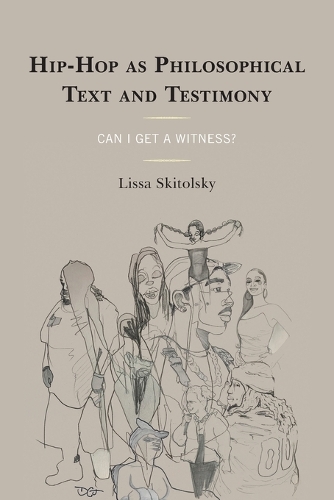
Книга Hip-Hop as Philosophical Text and Testimony: Can I Get a Witness?
Hip-hop as survivor testimony? Rhymes as critical text? Drawing on her own experiences as a lifelong hip-hop head and philosophy professor, Lissa Skitolsky reveals the existential power of hip-hop to affect our sensibility and understanding of race and anti-black racism. Hip-Hop as Philosophical Text and Testimony: Can I Get a Witness? examines how the exclusion of hip-hop from academic discourse around knowledge, racism, white supremacy, genocide, white nationalism, and trauma reflects the very neoliberal sensibility that hip-hop exposes and opposes. At this critical moment in history, in the midst of a long overdue global reckoning with systemic anti-black racism, Skitolsky shows how it is more important than ever for white people to realize that our failure to see this system—and take hip-hop seriously—has been essential to its reproduction. In this book, she illustrates the unique power of underground hip-hop to interrupt our neoliberal and post-racial sensibility of current events.
"
Skitolsky explores how underground hip-hop generates philosophical value as critical theory and anti-racist practice, based on its subversive production of subjugated knowledge. Examples drawn from work by N.W.A., Tupac Shakur, KRS-One, and Public Enemy demonstrate the power of hip-hop as a culture “bearing witness to and resisting the infliction of anti-Black violence in every social and political institution in the United States" (p. 1). Skitolsky's blistering analyses explore the “normalization of systemic racism” and how hip-hop is “politically significant as a form of testimony" (p. 12). She convincingly argues for the genre's therapeutic value by asserting that “hip-hop is the only form of popular culture that testifies to the traumas suffered from being-black in America" (p.14). The author draws on cultural theorists Paul Taylor, Charles Mills, George Yancy, and Audre Lorde (as well as Du Bois, Foucault, and Lacan) to portray and indict a “white sensibility” that is sustained by the “refusal to ask specific kinds of questions or analyze taken-for-granted assumptions” (p. 7) in relation to political inequalities. Skitolsky provides careful consideration of PTSD as a ground of Black life and a detailed critique of scholarly refusals to encompass Black social death within genocide studies. Highly recommended. Lower-division undergraduates through faculty; professionals.
" - Choice