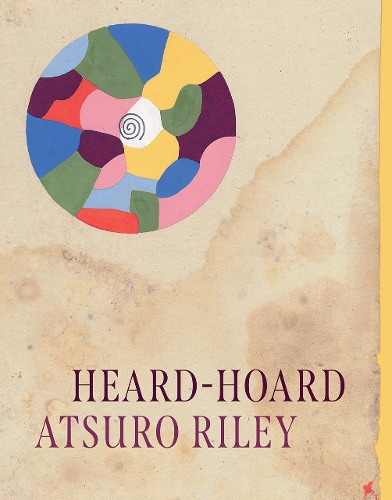
Книга Heard-Hoard
Winner of the Alice Fay di Castagnola Award from the Poetry Society of America, this collection of verse from Atsuro Riley offers a vivid weavework rendering and remembering an American place and its people.
Recognized for his “wildly original” poetry and his “uncanny and unparalleled ability to blend lyric and narrative,” Atsuro Riley deepens here his uncommon mastery and tang. In Heard-Hoard, Riley has “razor-exacted” and “raw-wired” an absorbing new sequence of poems, a vivid weavework rendering an American place and its people.
At once an album of tales, a portrait gallery, and a soundscape; an “inscritched” dirt-mural and hymnbook, Heard-Hoard encompasses a chorus of voices shot through with (mostly human) histories and mysteries, their “old appetites as chronic as tides.” From the crackling story-man calling us together in the primal circle to Tammy figuring “time and time that yonder oak,” this collection is a profound evocation of lives and loss and lore.
"Riley creates a uniquely American idiom—expressive, earthy, and flat-out dazzling—that will slake and succor readers for many years to come." - World Literature Today
"
"No one in American poetry has a voicebox quite like Atsuro Riley’s—trained by ear on a mother’s native Japanese, the raised vowels of the South Carolina Lowcountry, and Gerard Manley Hopkins’s hyphen-happy, consonant-crowded compounds. In his second collection, Riley lends his inimitable instrument to boyhood acquaintances and communal complaints: 'We come gnawed by need on hands and knees.'"
" - Boston Globe, Best Books of 2021"
"Riley's oeuvre breaks new lyric ground with its singular style. This rich, polyphonic collection will keep readers entranced."
" - Publishers Weekly"The essential collection of our moment—what we’ve needed most without knowing it." - McSweeney's
"“The collection calls us back to the roots of language, breaking it apart and putting it back together. Riley’s inventiveness is an invitation to notice language’s connection to the natural world, both equally complex and beautiful.”" - Ploughshares
"Riley captures the accents of his hardscrabble world through language worked to a country eloquence."
- Poetry Foundation
"A superb book about people attempting to make a life together in America. . . .This book is crucial to contemporary American poetry right now because it shows a lyric poet of unique formal gifts doing something we’d usually expect from a great novelist—exploring and fully rendering our striving to give shape and meaning to our lives together—all while maintaining the force and subtlety of his lyric gift."
- Adroit Journal
" "The strongest new book of poetry this year. . . . Magnificent. . . . a long-awaited and satisfying book."" - Bookworm, Top Ten Books 2021
"Lush and strange, Riley’s voice is utterly transfixing, bringing South Carolina low country to life in enviable detail ('Her null eye long since gone isinglassy, opal') and rich music ('Crosses Clary bless her barrow up there now / Pausing and voweling there—/ the place where the girl fell'). . . . Phrases borrowed from Bishop, Dickinson, Heaney, Virgil, and Hopkins offer the book a splendid chorus. Riley’s vision is rich with luminous lines."" - "Poet's Bookshelf," Poetry Society of America
"One of the most exciting books of poetry I've read in my life." - Michael Silverblatt, host, "Bookworm"
"
"In these pages, Riley creates a uniquely American idiom—expressive, earthy, and flat-out dazzling—that will slake and succor readers for many years to come."
" - World Literature Today"
“In ways that few poets can access—think Hopkins, think Celan—Riley is at work in a different intelligence language holds, one folded underneath the ratios of daily logic. . . . We gain permission to enter a sacred and strange field, where words don’t describe a life, but a life is inscribed in words.”
" - Colorado Review"Reading Atsuro Riley’s poetry is not only a pleasure, albeit a difficult and challenging one at times, it is an instruction manual. Heard-Hoard is a must read, not only for poets, but for all writers who take writing seriously. Who treat it as a vocation." - Rochford Street Review
"Radical in its bracing mix of lyric and narrative and in its deeply compassionate humanism."
- Hudson Review
"Both Heard-Hoard and Romey’s Order immerse the reader in the South Carolina lowcountry, in a community filled with character, story, and landscape. However, in the second book, it is a tired and broken place. Romey’s world, if not actively inviting, at least feels exciting, gorgeous in its terror. In both collections, the beauty in Riley’s language is undeniable. It chatters with exuberance and discovery in Romey’s Order; in Heard-Hoard it moans like a blues. Both books present abuse, racism, and displacement, one through the eyes of a child, the other through the eyes of victims and scarred survivors. Perhaps these books pair like innocence and experience, or perhaps they pair like the individual and the collective. Either way they show a poet perpetually at the top of his craft, balancing music and silence to create power." - Georgia Review
"“Linguistically and sonically intense, emotionally buffeting. . . . I can’t think of a poet writing right now more original, more true to his internal tuning fork and singular vision.”
" - Lana Turner Journal
""Every line is a mouthful in Atsuro Riley's wild and extravagant poems, a terrarium of 'perservating fiddler-crabs pockworking the pluff-mud.' In his poetry of profusion, syntax warps, and parts of speech change places. But this is no random riot of language: Riley brings into being a particular world, a childhood in the South Carolina lowcountry and its 'rudimental stories,' a land as violent and gorgeous as the idiom he invents for it."
" - The American Academy of Arts and Letters, citation for the Award in Literature
"Atsuro Riley is among our most important contemporary poets because he is among our most precise. Riley’s meticulous phrasing, finely wrought syntax, and attunement to the peculiarities of rural speech make his most recent collection, 2021’s Heard-Hoard, 'something important.' . . . Poetry, for Riley, is humanity’s saving grace, the ladder out of the dirt." - Harvard Review