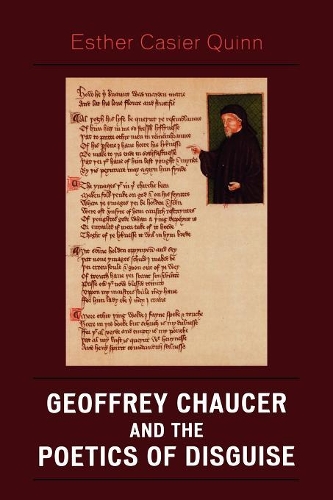
Книга Geoffrey Chaucer and the Poetics of Disguise
This work considers virtually all of Geoffrey Chaucer's writings as disguised reflections of matters personal and political. Chaucer wrote in a particularly crucial time of political change in England. He was in a unique position to see and hear more than he dared to express. He developed a 'poetics of disguise' to express his increasingly critical views of British royalty without seeming to criticize or dissent. He utilized the voices of women, pagans, personified abstractions, and birds to create a debate about the social and political issues of the day. New readings of his major works including his short poems are included in this unique analysis.
"Quinn presents Chaucer's poetry as a veiled commentary on political events of his time....Quinn's survey of the poetry is impressive. The reader will be stimulated by the author's ability to find allusions to Richard II and others in the most unexpected places. Good bibliography. Recommended." - CHOICE, December 2008
"There is a particular pleasure in encountering the reflections of a seasoned scholar as she discusses a poet whose work she has read and taught for the larger part of her life. While such a book may not offer the excitement of revisionist polemic and cutting-edge theory, it furnishes the quieter interest of a mind honed by many years of scholarship and grappling with splendid texts. [Quinn's analysis of the rarely studied 'Prayer to Our Lady,' which she reads as a very personal tribute to the feminineby a poet dealing with his own 'feelings of guilt, remorse, and repentance,' is moving and profound." - Speculum, July 2009
"This is, to say the least, a stimulating book, in many ways a superb book. It is also a feverish book, down to the final sentences Very few who began the war lasted to the end. The world has changed forever. Pegg delivers, as promised, a breathtaking revision. Perhaps we should take a step back and exhale once again, slowly." - College & Research Libraries, July 2009
"There is a particular pleasure in encountering the reflections of a seasoned scholar as she discusses a poet whose work she has read and taught for the larger part of her life. While such a book may not offer the excitement of revisionist polemic and cutting-edge theory, it furnishes the quieter interest of a mind honed by many years of scholarship and grappling with splendid texts. [Quinn's analysis of the rarely studied 'Prayer to Our Lady,' which she reads as a very personal tribute to the feminine by a poet dealing with his own 'feelings of guilt, remorse, and repentance,' is moving and profound." - Speculum, July 2009