Rodrigo's research was featured on a cover article in Discover magazine, named one of the top 100 scientific stories of 2005 (for discovering the "Jennifer Aniston neuron"
In 2014, Rodrigo was selected as one of the "10 UK RISE Leaders in Science and Engineering"
Rodrigo's work has been published in big-media outlets, including: the New York Times, Washington Post, Scientific American, Daily Mail, New Scientist, and The Independent
Platform from previous books
Author has given lectures to promote previous book, Borges and Memory
Local market includes Waterstones and other large UK bookstores
If we lose our memories, are we still ourselves? Is identity merely a collection of electrical impulses? What separates us from animals, or from computers?
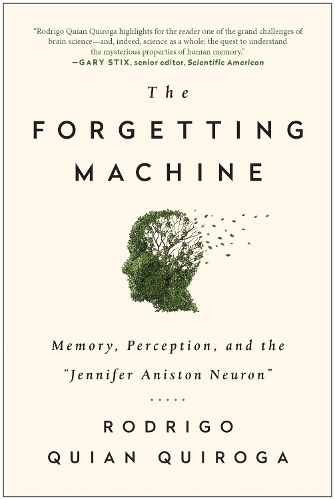
From Plato to Westworld, these questions have fascinated and befuddled philosophers, artists, and scientists for centuries. In The Forgetting Machine, neuroscientist Rodrigo Quian Quiroga explains how the mechanics of memory illuminates these discussions, with implications for everything from understanding Alzheimer's disease to the technology of Artificial Intelligence.
You'll also learn about the research behind what Quian Quiroga coined "Jennifer Aniston Neurons," cells in the human brain that are responsible for representing specific concepts, such as recognizing a certain celebrity's face. The discovery of these neurons opens new windows into the workings of human memory.
In this accessible, fascinating look at the science of remembering, discover how we turn perceptions into memories, how language shapes our experiences, and the crucial role forgetting plays in human recollection. You'll see how electricity, chemistry, and abstraction combine to form something more than the human brain, the human mind. And you'll gain surprising insight into what our brains can tell us about who we are.
The Forgetting Machine takes us on a journey through science and science fiction, philosophy and identity, using what we know about how we remember (and forget) to explore the very roots of what makes us human.