'The Fluid Envelope of our Planet is an impressive, entertaining, and comprehensive account of physical oceanography. The careful research and compelling writing style of Eric L. Mills place the story of oceanography firmly in its historical context, with sensitivity to political, economic, social, and cultural trends. This book deftly shows that the roots of this scientific field can be followed to small, maritime-oriented nations such as Sweden and Norway and to upcoming scientific powers such as Canada, to Coast Guard officers and to princes, and to funding motivated by such diverse concerns as fisheries, engineering, weather forecasting, and safe shipping.' -- Helen M. Rozwadowski, History and Maritime Studies, University of Connecticut
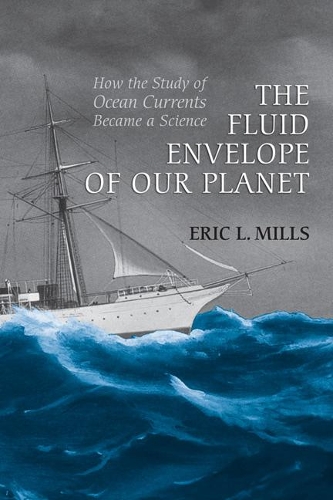
Oceans have had a mysterious allure for centuries, inspiring fears, myths, and poetic imaginations. By the early twentieth century, however, scientists began to see oceans as physical phenomena that could be understood through mathematical geophysics. The Fluid Envelope of Our Planet explores the scientific developments from the early middle ages to the twentieth century that illuminated the once murky depths of oceanography.
Tracing the transition from descriptive to mathematical analyses of the oceans, Eric Mills examines sailors' and explorers' observations of the oceans, the influence of Scandinavian techniques on German-speaking geographers, and the eventual development of shared quantitative practices and ideas. A detailed and beautifully written account of the history of oceanography, The Fluid Envelope of Our Planet is also an engaging account of the emergence of a scientific discipline.