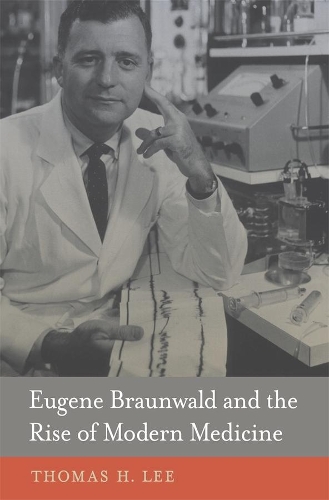
Книга Eugene Braunwald and the Rise of Modern Medicine
Since the 1950s, the death rate from heart attacks has plunged from 35 percent to about 5 percent—and fatalistic attitudes toward this disease and many others have faded into history. Much of the improved survival and change in attitudes can be traced to the work of Eugene Braunwald, MD. In the 1960s, he proved that myocardial infarction was not a “bolt from the blue” but a dynamic process that plays out over hours and thus could be altered by treatment. By redirecting cardiology from passive, risk-averse observation to active intervention, he helped transform not just his own field but the culture of American medicine.
Braunwald’s personal story demonstrates how the forces of history affected the generation of researchers responsible for so many medical advances in the second half of the twentieth century. In 1938 Nazi occupiers forced his family to flee Vienna for Brooklyn. Because of Jewish quotas in medical schools, he was the last person admitted to his class, but went on to graduate number one. When the Doctor Draft threatened to interrupt his medical training during the Korean War, he joined the National Institutes of Health instead of the Navy, and there he began the research that made him the most influential cardiologist of his time.
In Eugene Braunwald and the Rise of Modern Medicine, Thomas H. Lee offers insights that only authoritative firsthand interviews can provide, to bring us closer to this iconic figure in modern medicine.
"[Lee] attempts to capture both the life of this remarkable man, now 84, and the explosive scientific progress that fundamentally altered medicine in the second half of the 20th century… [Braunwald] became a leader in medicine’s cultural shift toward relying less on experience and more on rigorous science… Lee’s book is thoroughly researched and well-written." - Wall Street Journal
"A pioneering 1971 study on myocardial infarction revealed that a heart attack is a process rather than a sudden karate chop, and hence eminently treatable. Eugene Braunwald’s finding has helped to cut U.S. heart-attack death rates from more than 30% to less than 10%. The story of the cardiologist’s life and work, set against a background of rapid change in medicine, is told engagingly by medic Thomas Lee. Braunwald has lived several lives since his 1938 escape from Nazi-controlled Austria, from glory years at the U.S. National Institutes of Health to his active ninth decade." - Nature
"This well-written and well-researched book uses the personal history of Eugene Braunwald (1929–) to describe the development of many of today’s medical advances. Lee describes how the changing trends in society at large and the medical profession shaped medical research, health care funding, and even the process for men and women to enter the medical profession… The book is a delight to read since the author recorded this oral history directly from Braunwald himself. The fascinating story of his life as a physician and his rise as one of the most influential cardiologists of modern times, as well as the discussion of the medical profession, makes this a must read for all health care professionals." - Choice
"An interesting retrospective about the changing nature of medicine and doctoring in American society through the well-told biography of one exemplary physician." - Library Journal